
Antarctica Peninsula Adventures: Icebergs, Kayaking, Wildlife & the Polar Plunge
By day nine of our Antarctica expedition, it truly hit us just how special this journey was. What started in Ushuaia felt like it was only yesterday, yet here we were — deep into the Antarctic Peninsula, surrounded by icebergs, wildlife, and landscapes so surreal they almost don’t feel real.
This leg of our journey was packed with unforgettable moments: kayaking among ice, cruising one of Antarctica’s most famous channels, spotting whales and seals, visiting penguin colonies, and even jumping into freezing Antarctic waters. Here’s what our days exploring the Antarctic Peninsula really looked like.
What Is the Weather Really Like in Antarctica?
Before we dive into the adventure, let’s talk about the weather — because it’s often not what people expect.
We visited Antarctica during the austral summer, when temperatures typically range between 28°F and 35°F (-2°C to 2°C). While that may not sound too extreme, conditions on the water can feel much colder thanks to wind and spray.
Our landing at Borgen Bay turned out to be one of the coldest days we experienced, with temperatures dipping to -1°C. This made it a perfect example of what people actually wear on disembarkation days: insulated jackets, hats, hoods, neck gaiters, gloves, and eye protection. Cold tolerance varies widely though — and John pretty much dressed the same way the entire trip!
Exploring Borgen Bay: Wildlife, Icebergs & Crystal-Clear Water
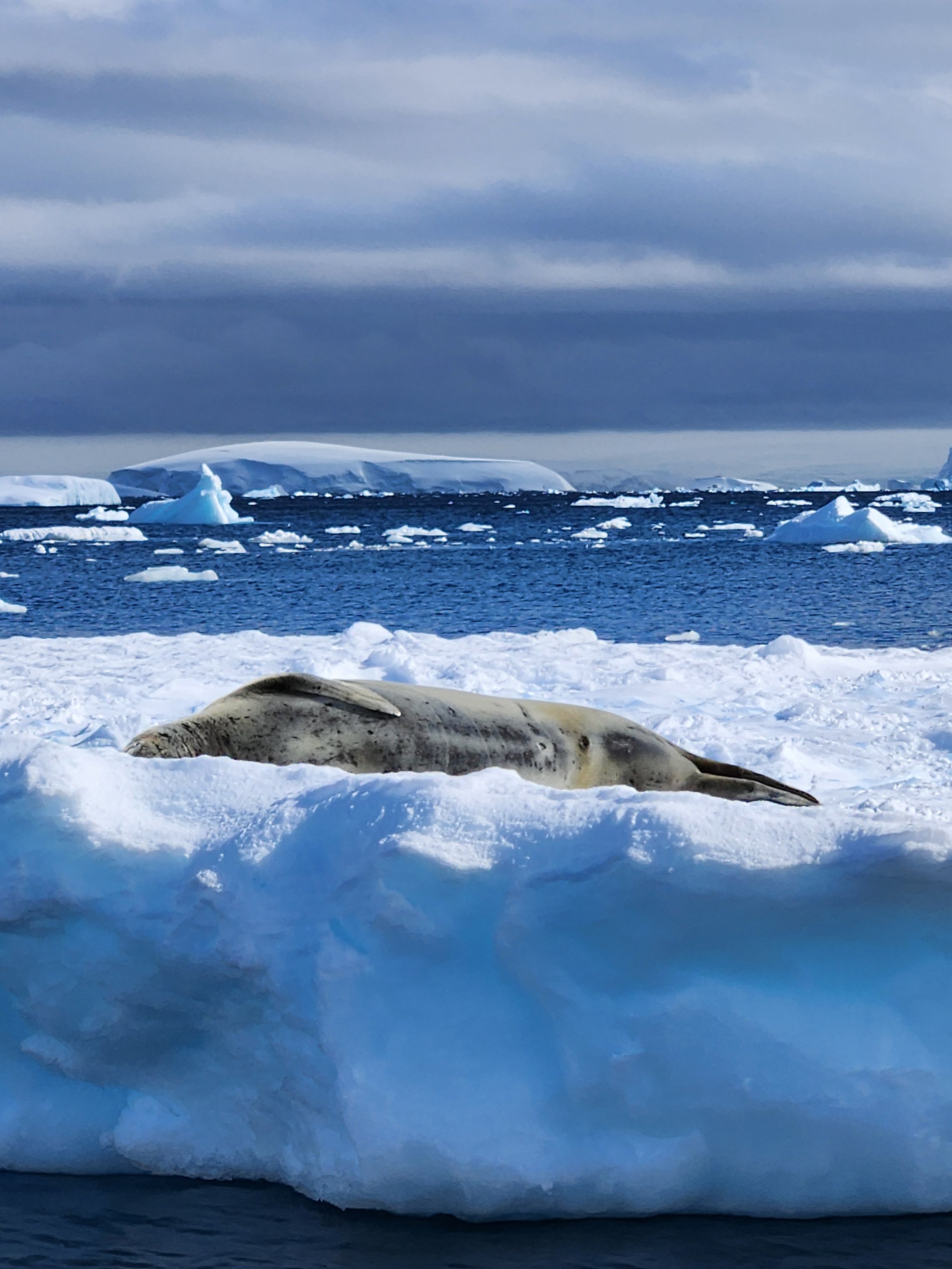
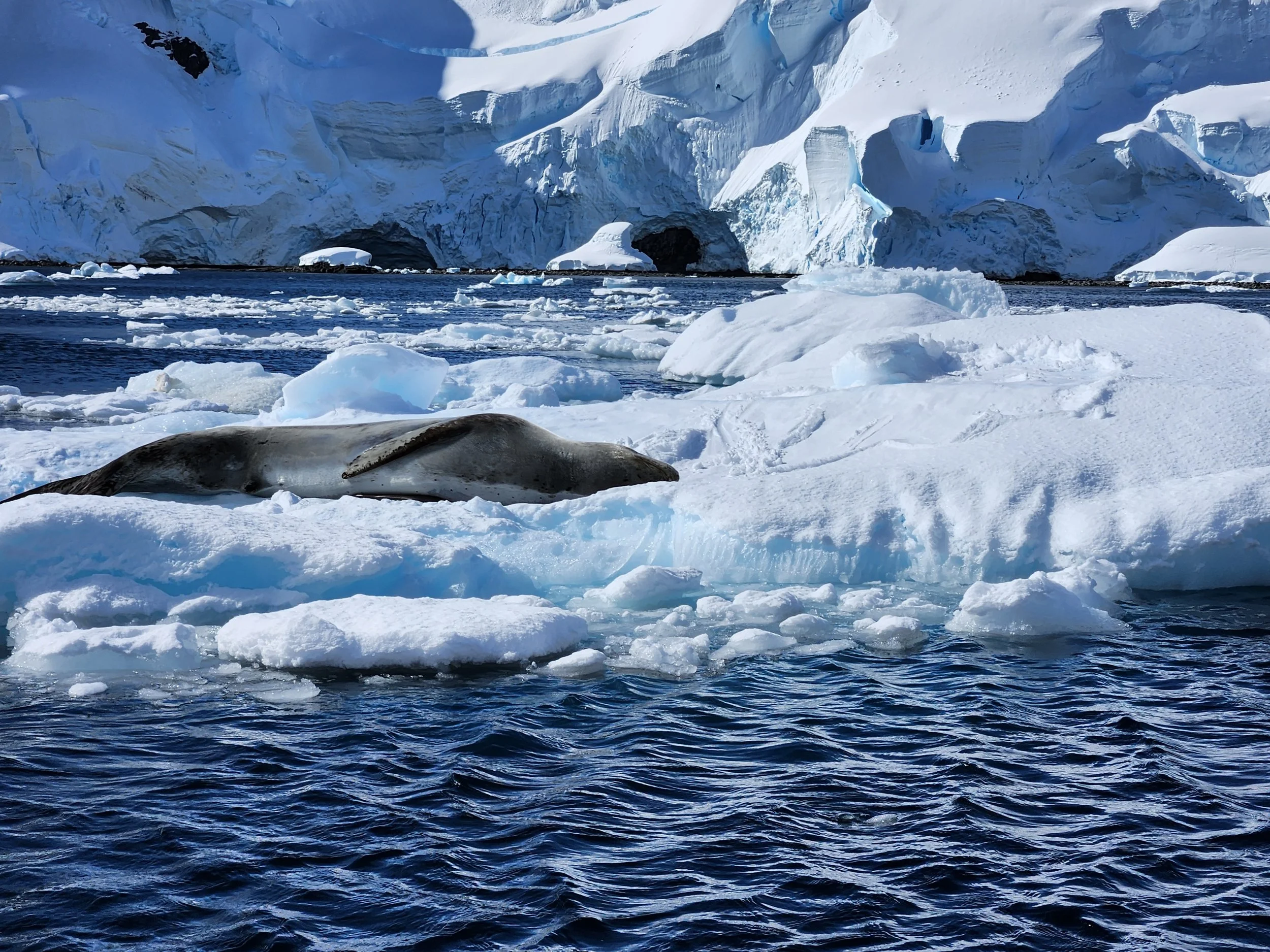
Borgen Bay quickly became one of my favorite stops of the entire expedition. The wildlife here was incredible, with whales surfacing nearby and seals lounging on icebergs.
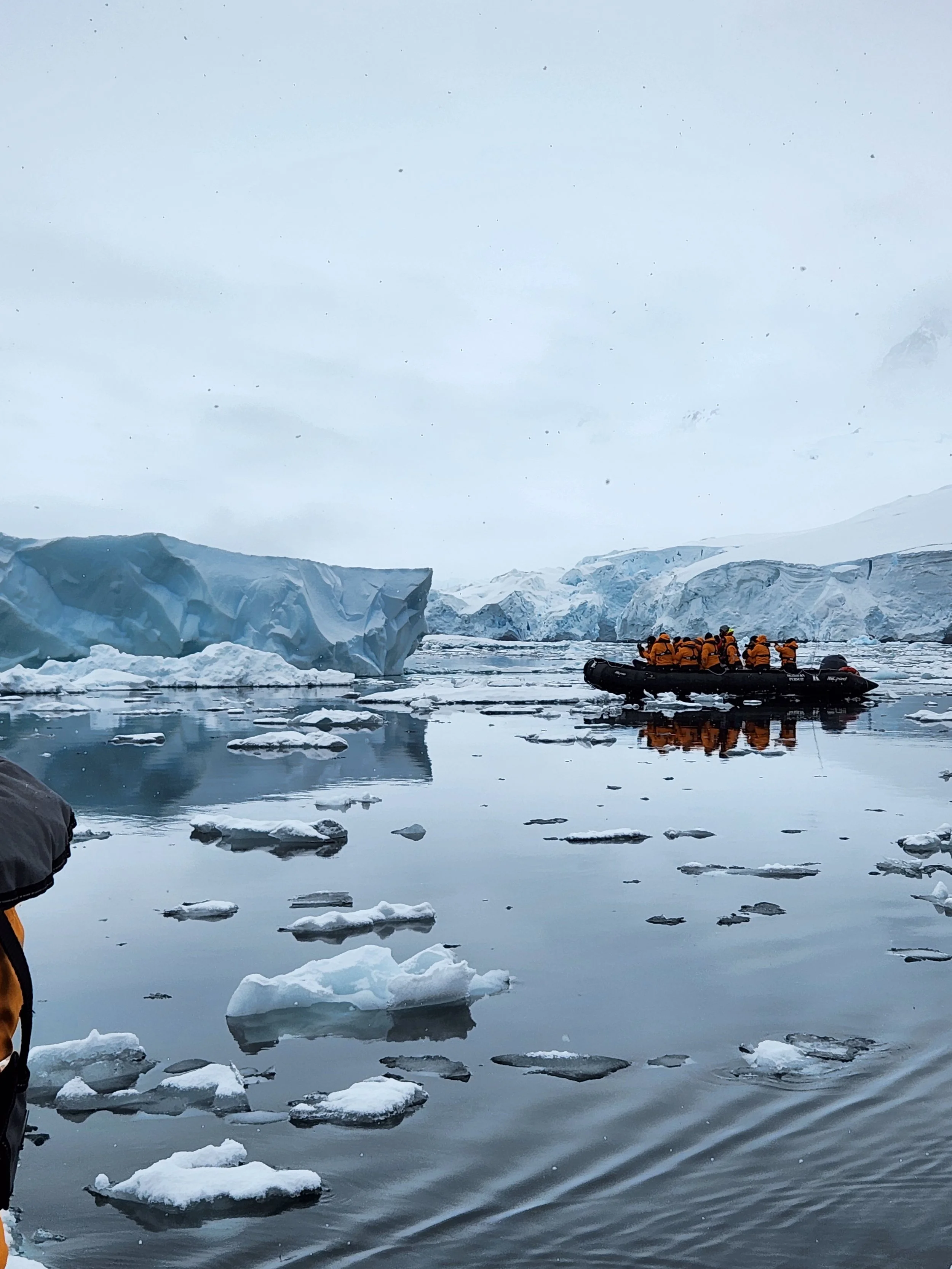
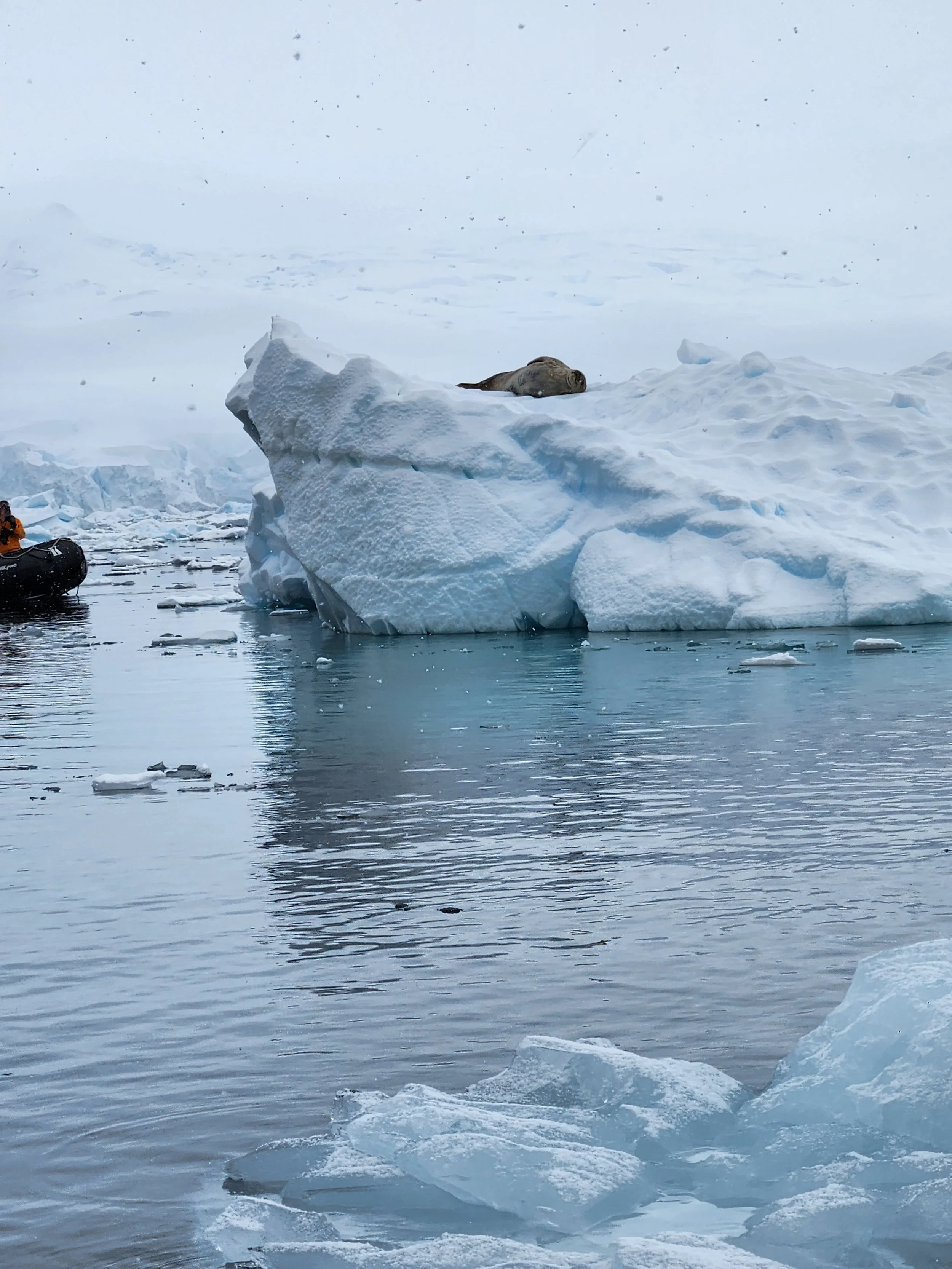
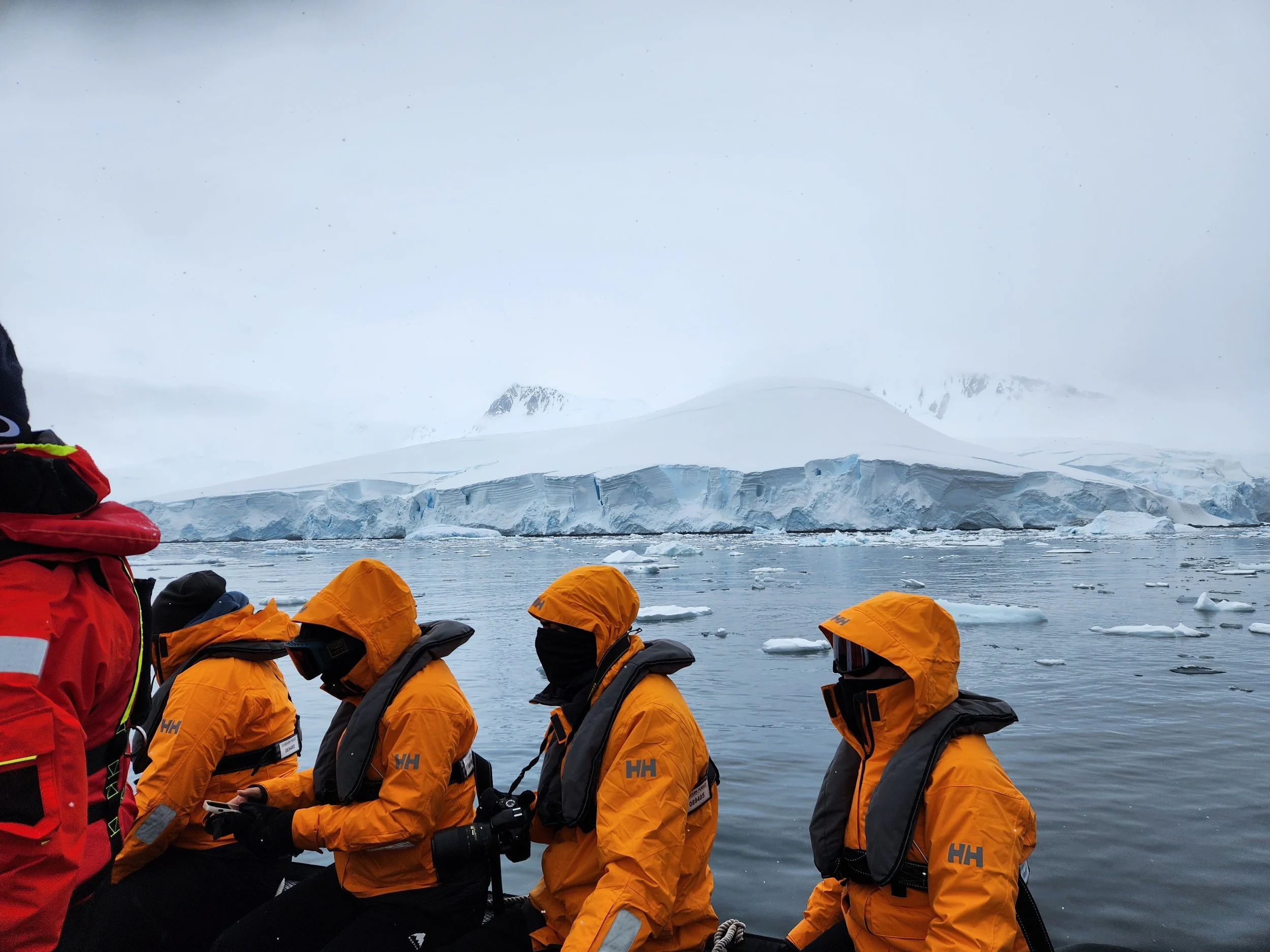
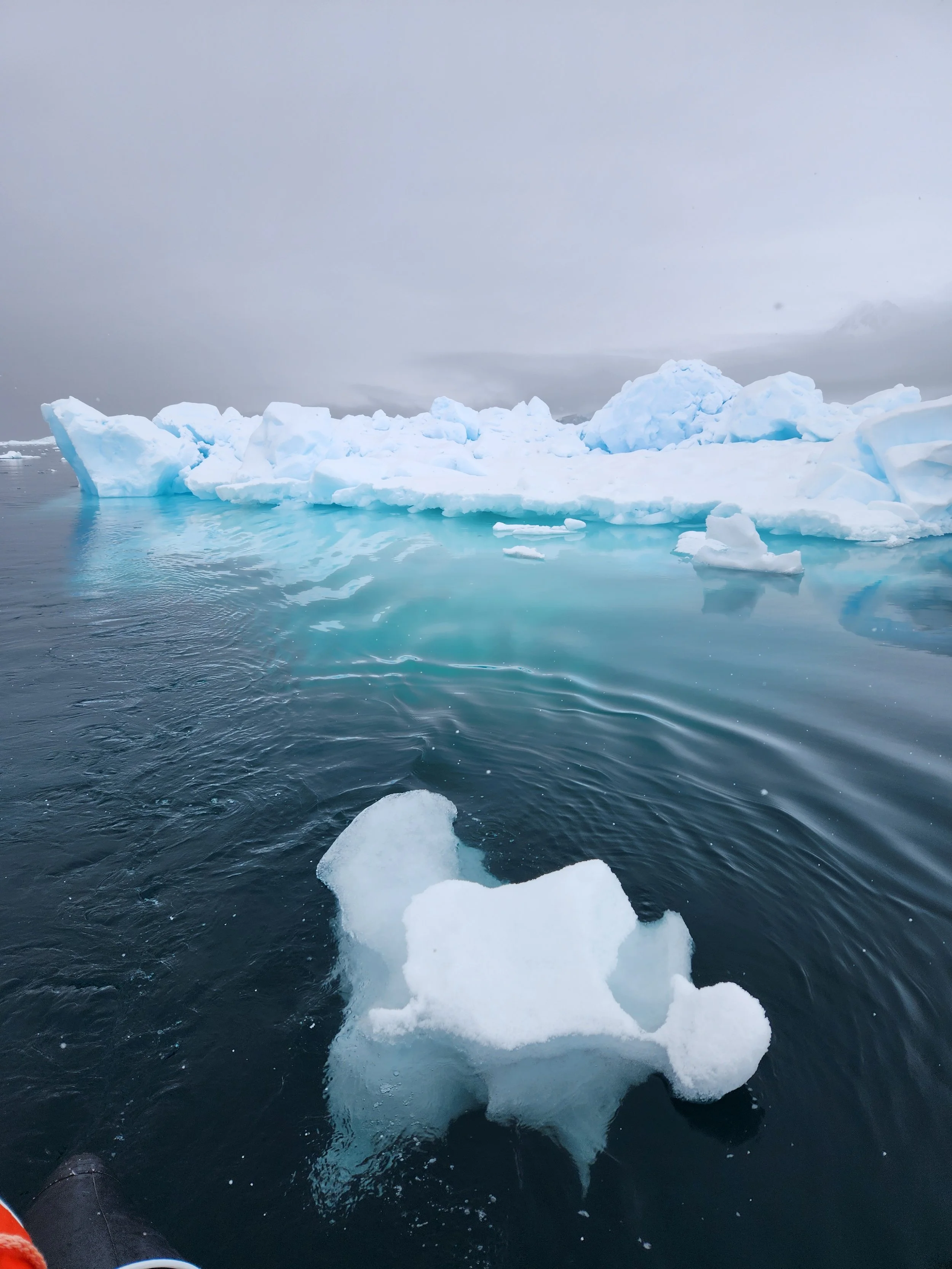
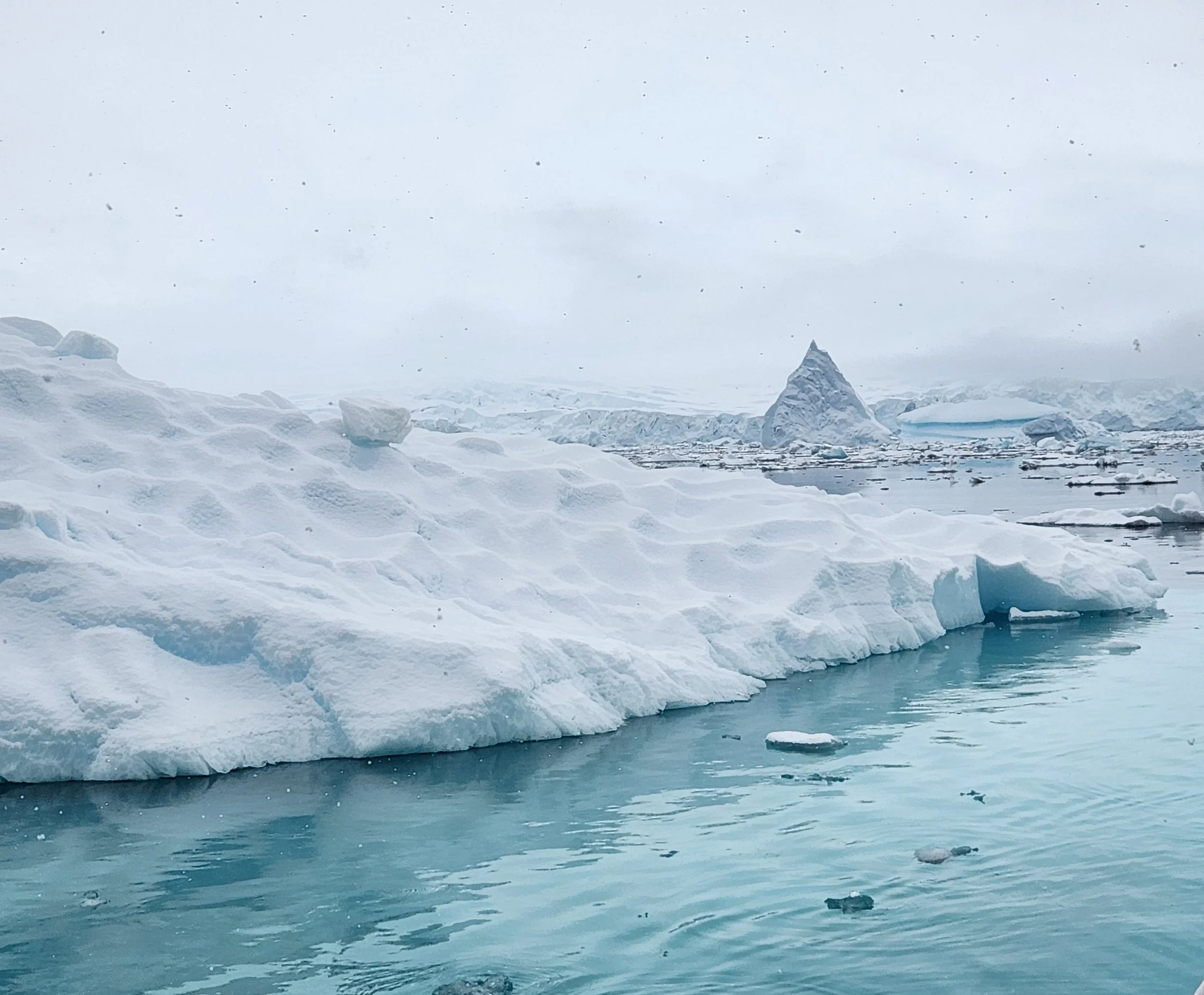
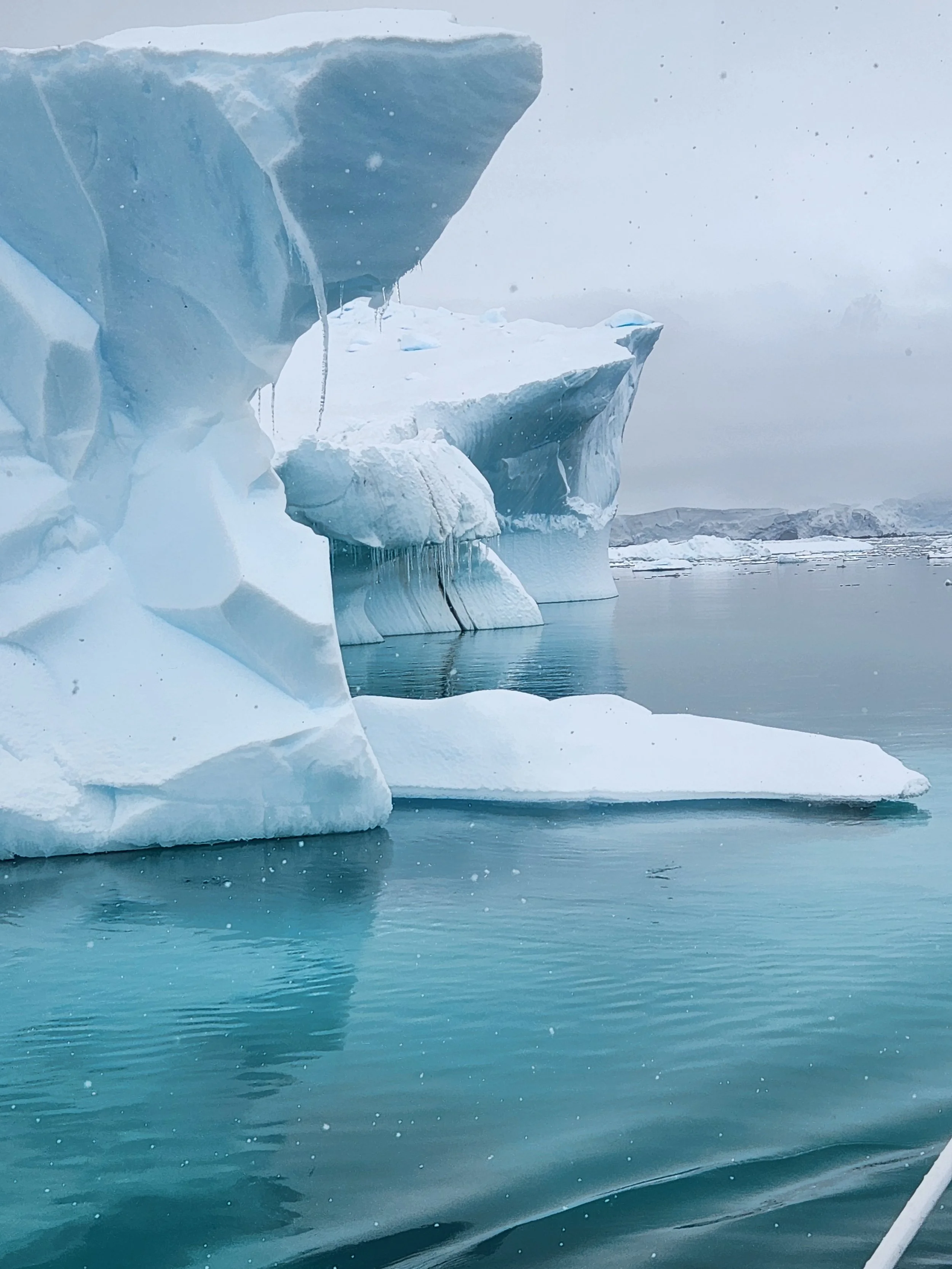
That said, it’s important to set expectations. While wildlife is abundant, animals don’t pose for the camera. Whales surface for just a moment before diving again, making photos and video challenging. Icebergs, on the other hand, are far more cooperative.
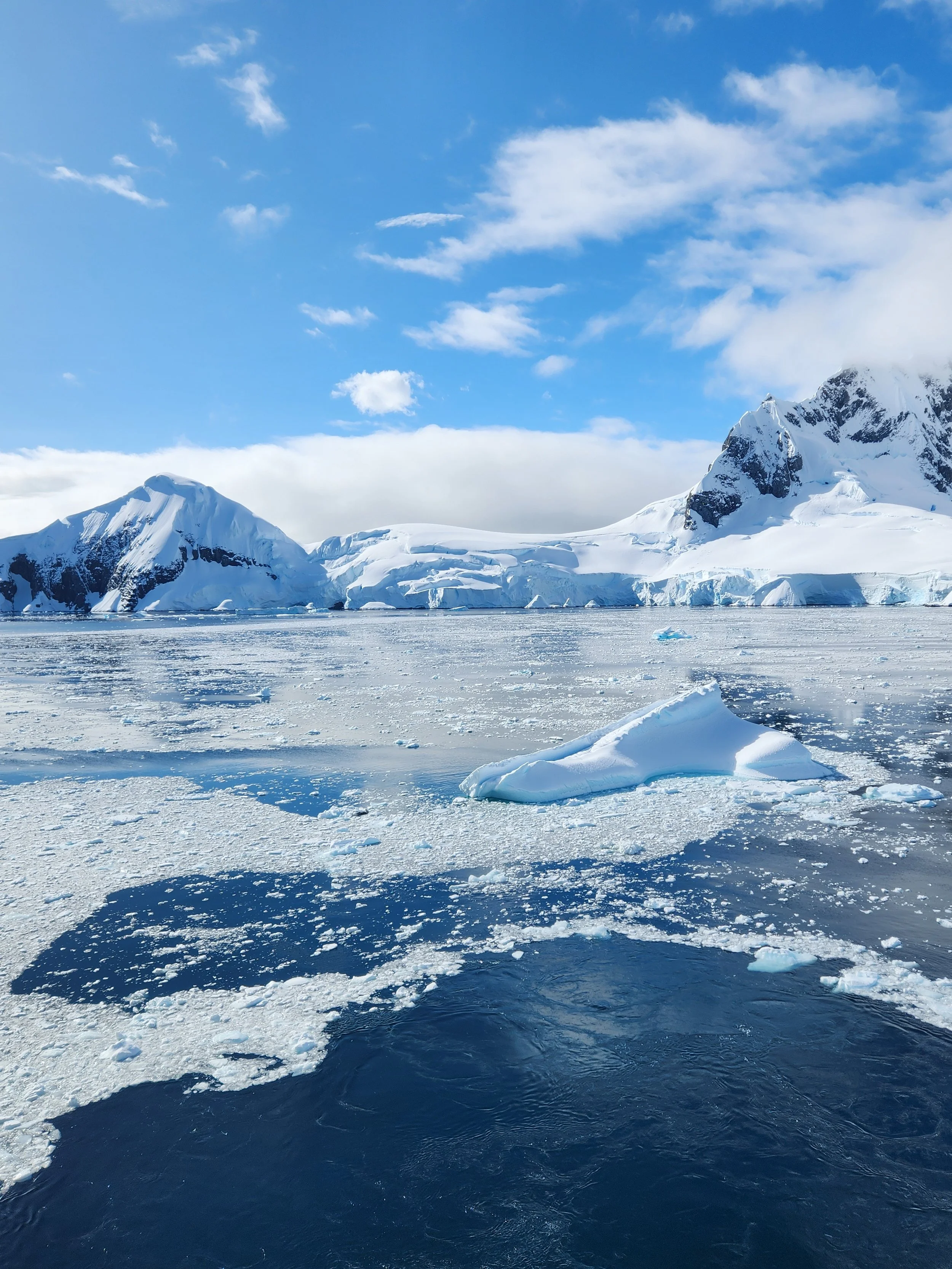
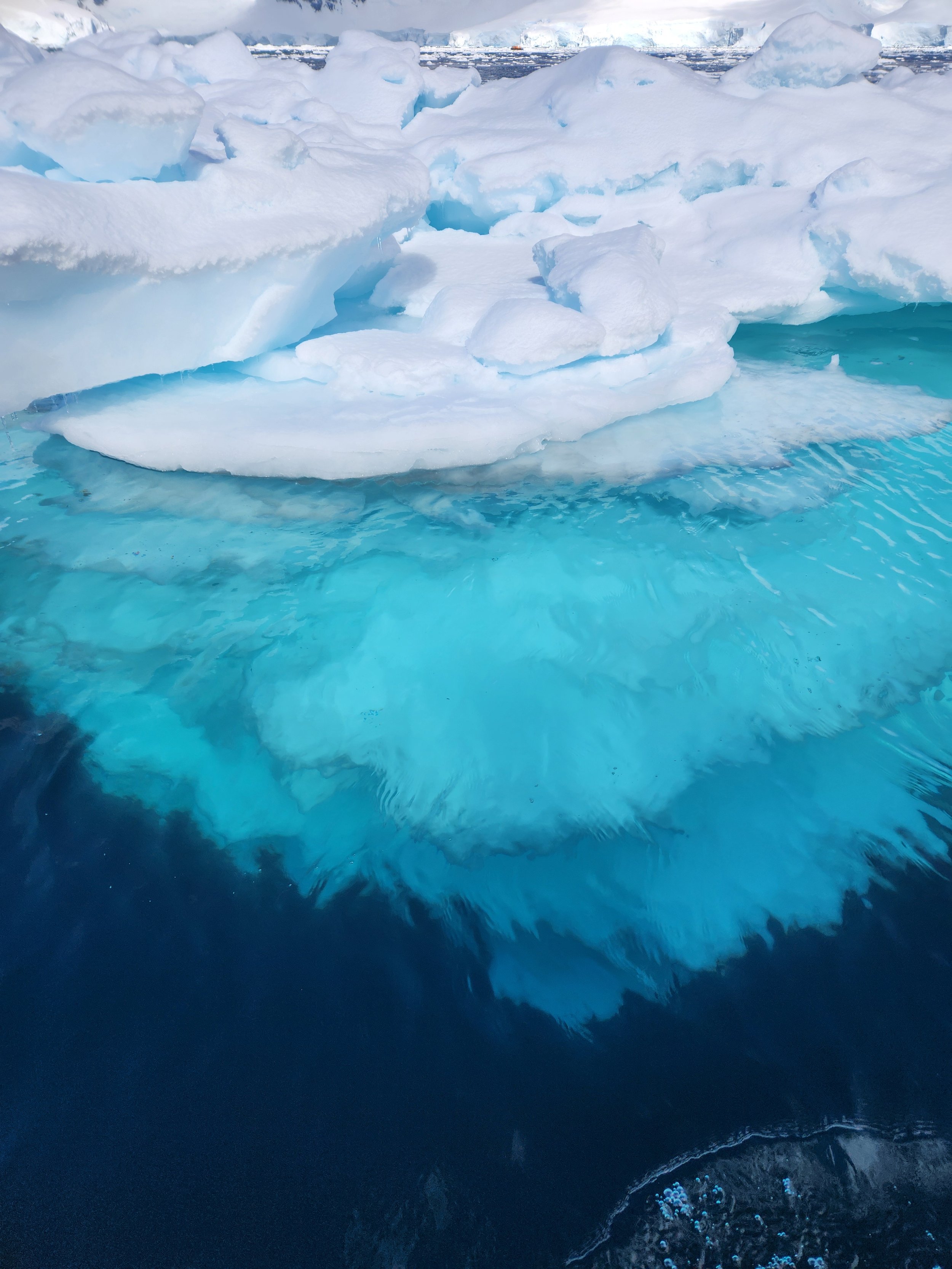
The clarity of the water around the icebergs was unreal. In many places, we could see deep below the surface, revealing massive underwater ice formations that were just as impressive as what we saw above.
After our chilly morning ashore, we headed back to the ship — where warming up in the outdoor hot tubs surrounded by snow felt especially rewarding.
Kayaking in Paradise Bay
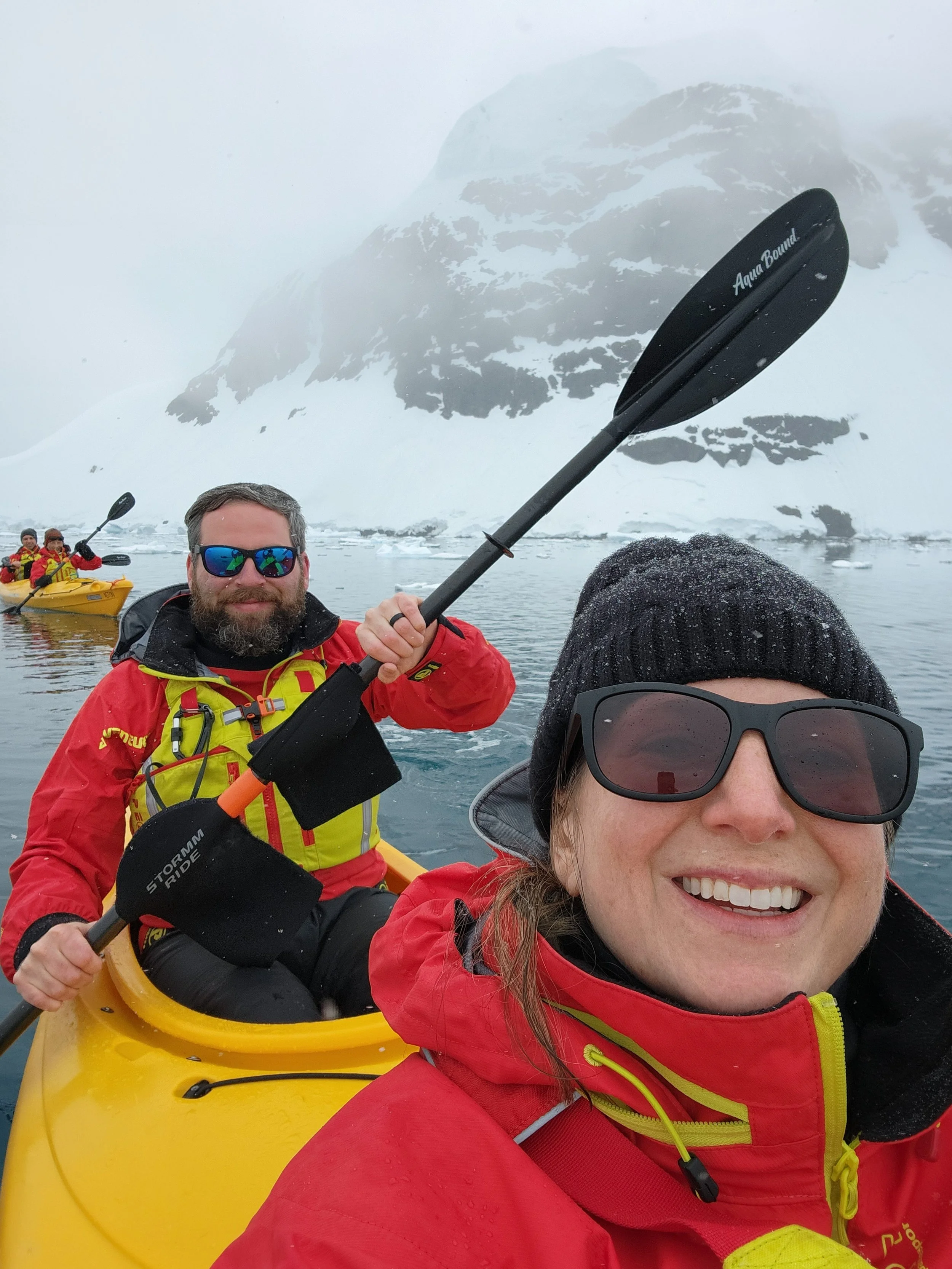
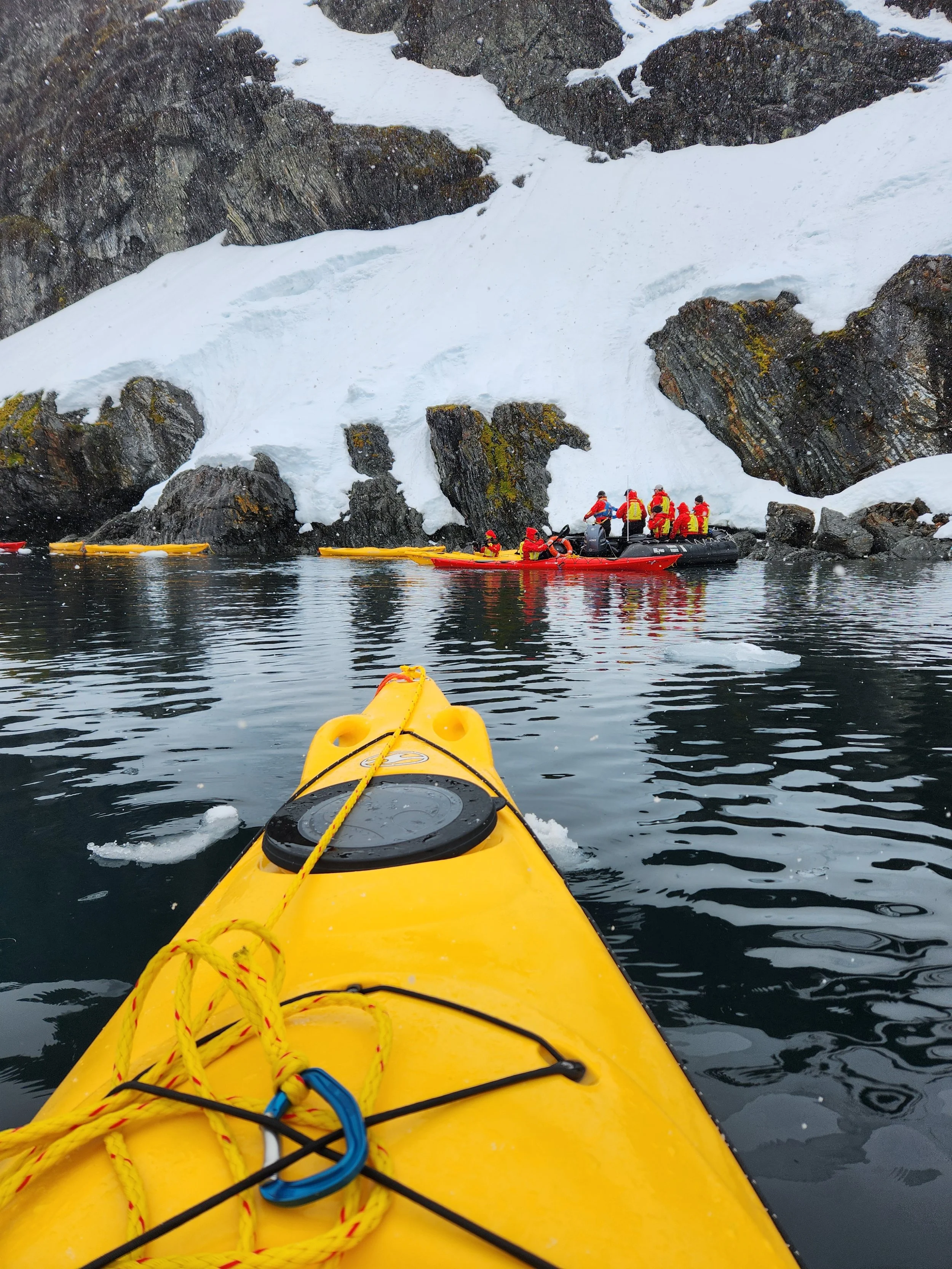
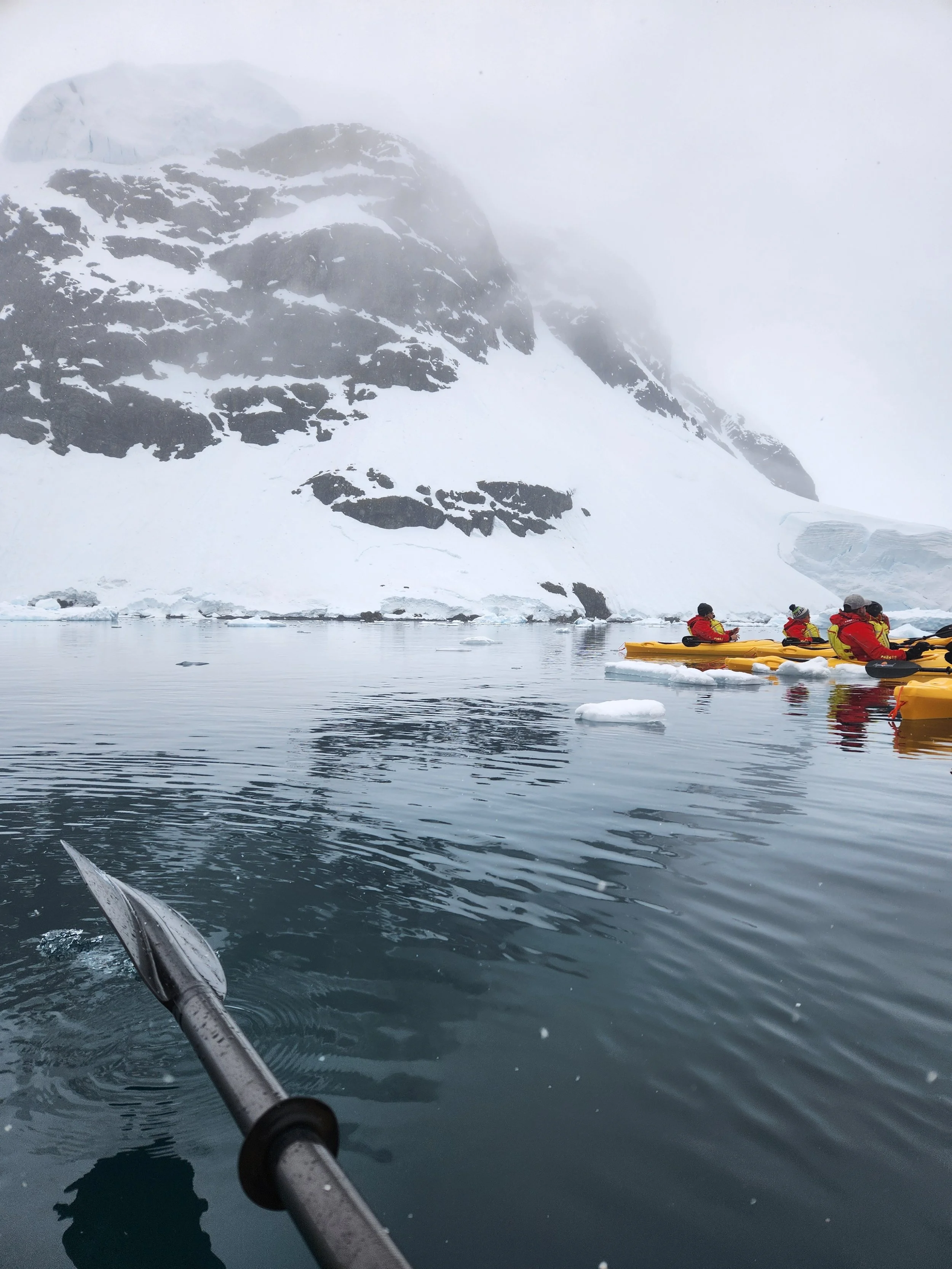
Next up was our highly anticipated kayaking excursion in Paradise Bay. Kayaking is an optional activity offered at an additional cost and does require meeting certain height, weight, and agility requirements. Getting from a Zodiac into a kayak can feel intimidating, but the guides are incredibly supportive and steady the kayak for you.
Once on the water, everything went quiet.
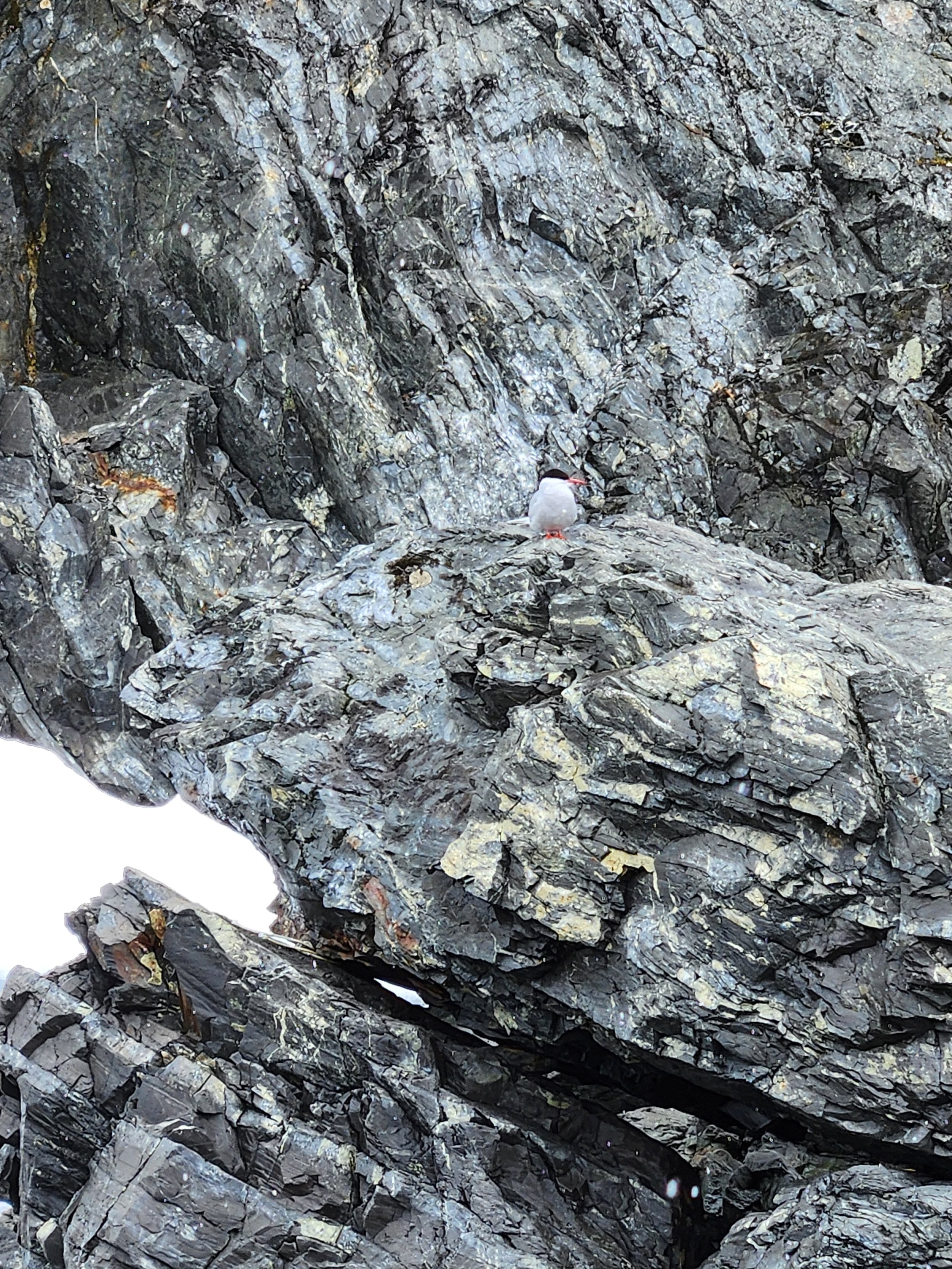
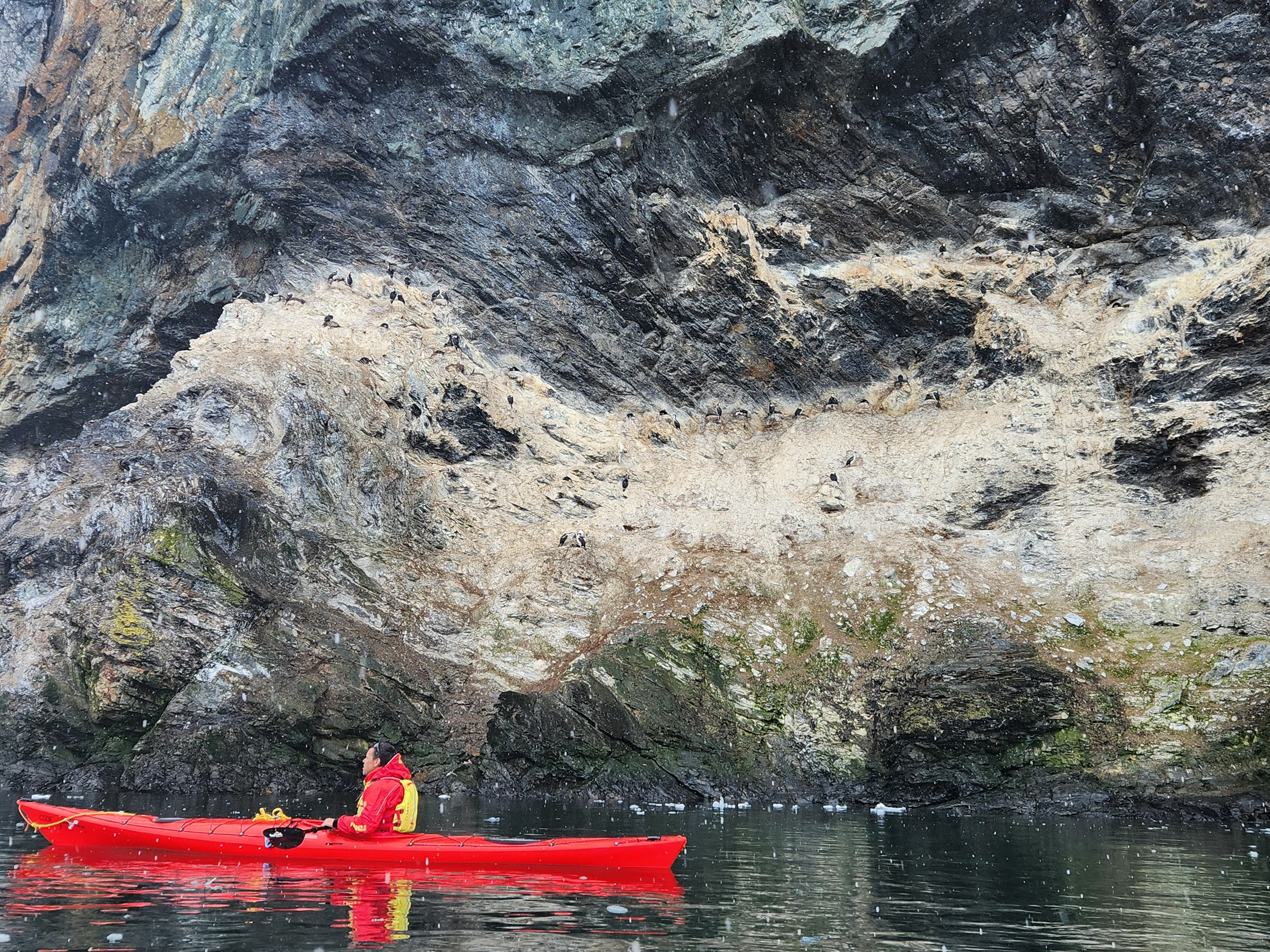
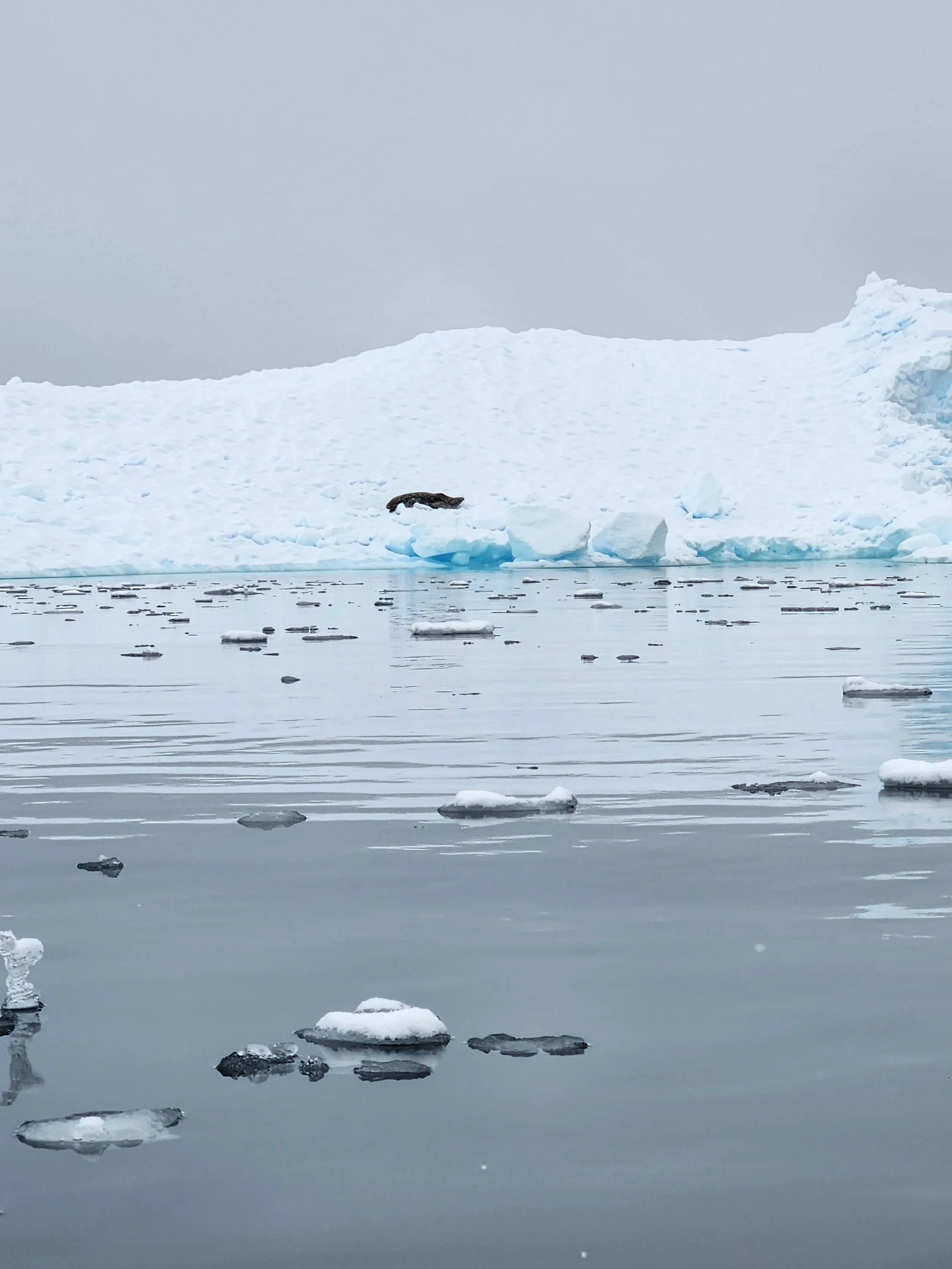
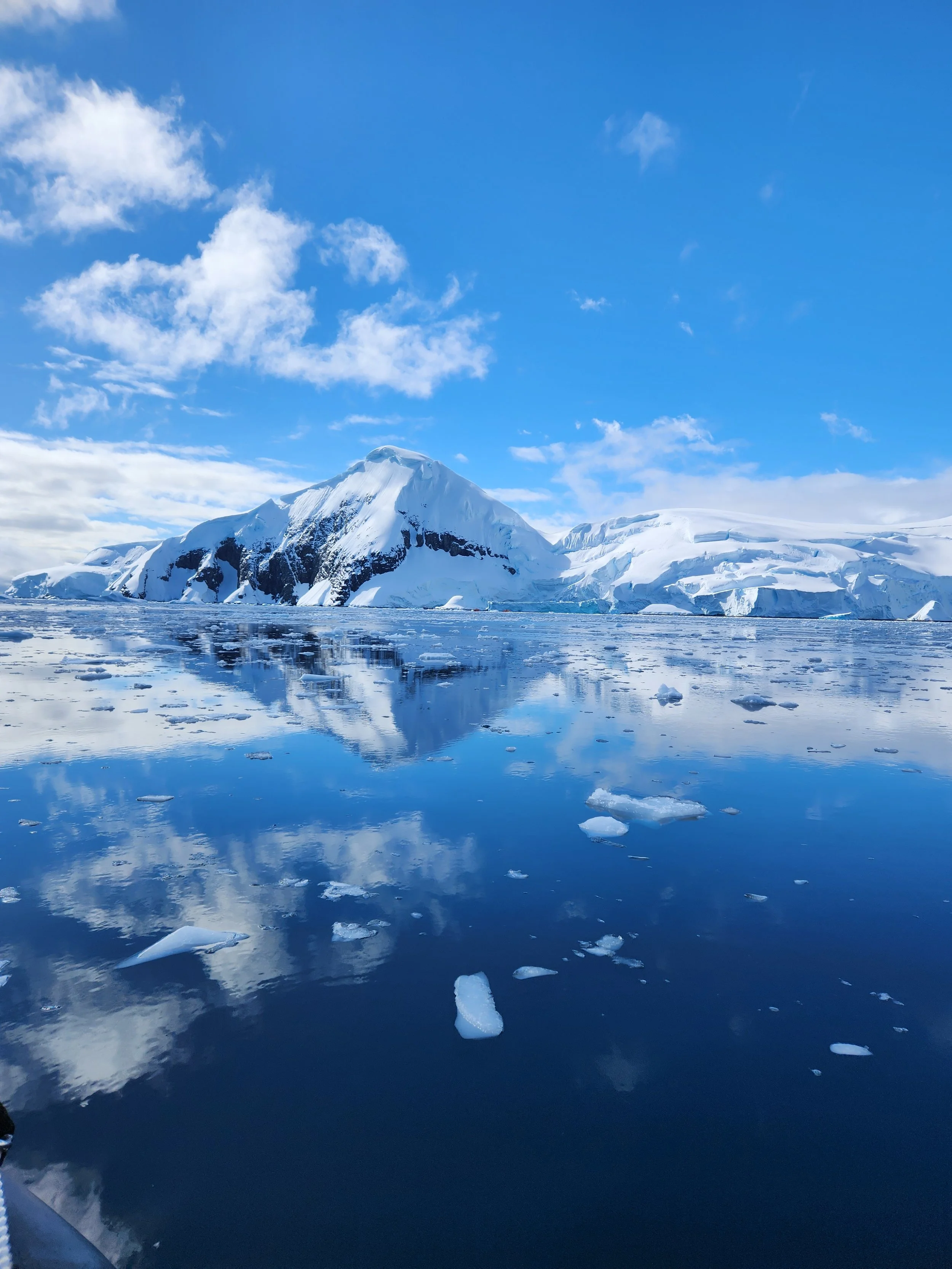
Paradise Bay was peaceful in a way that’s hard to describe — no engines, no crowds, just ice, mountains, and the distant call of a seal echoing across the bay. Our guides explained how the local ecosystem works, from fish to birds to seals, and then took us searching for that haunting seal call we heard in the distance.
We found it.
While we kept a respectful distance — these are wild animals, after all — this was a moment where having a camera with a good zoom really paid off.
Hidden Bay: Seals, Ice & Ever-Changing Views
The following day, we landed at Hidden Bay, another sub-zero Celsius day that had us fully bundled up again.
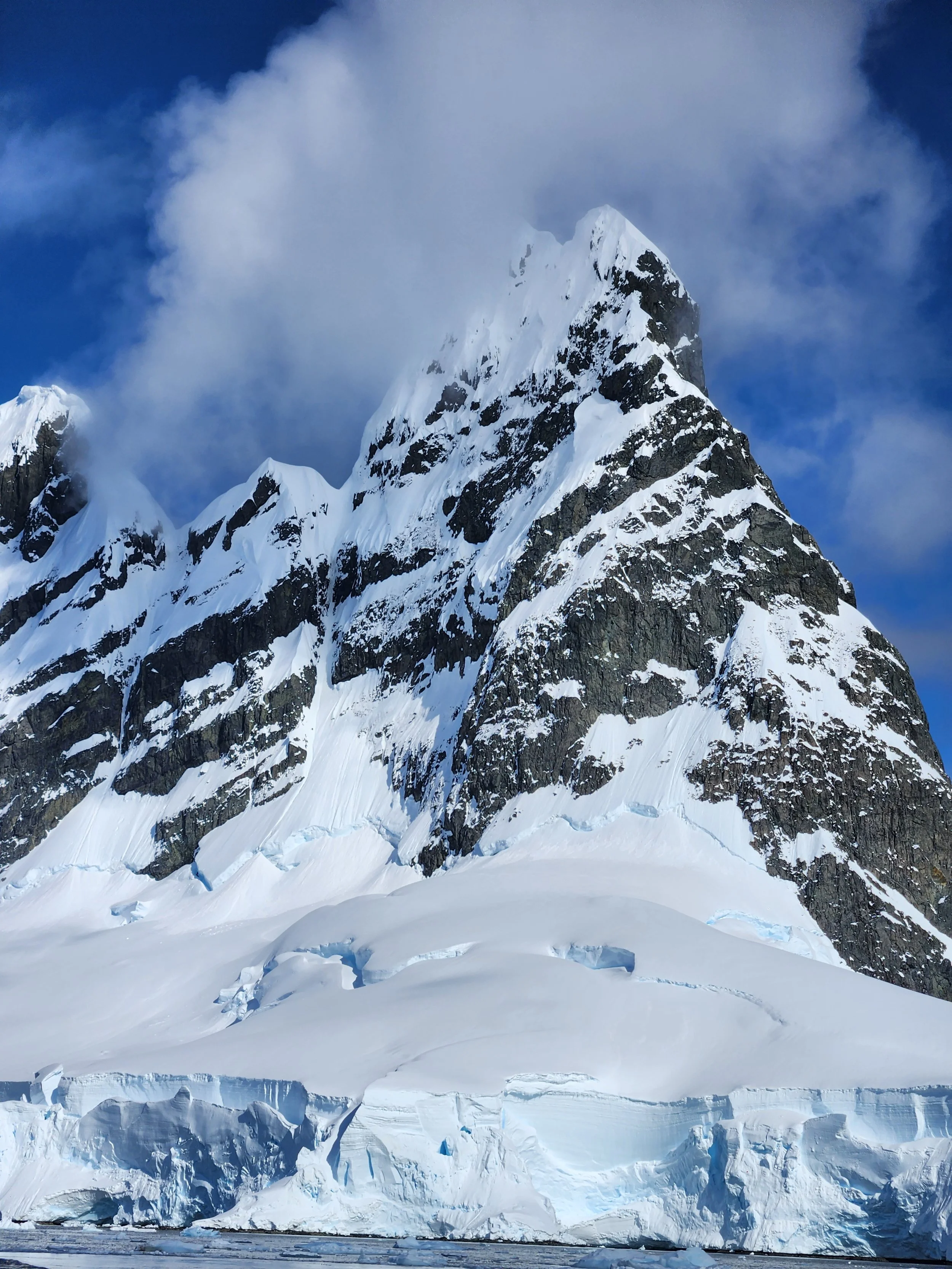
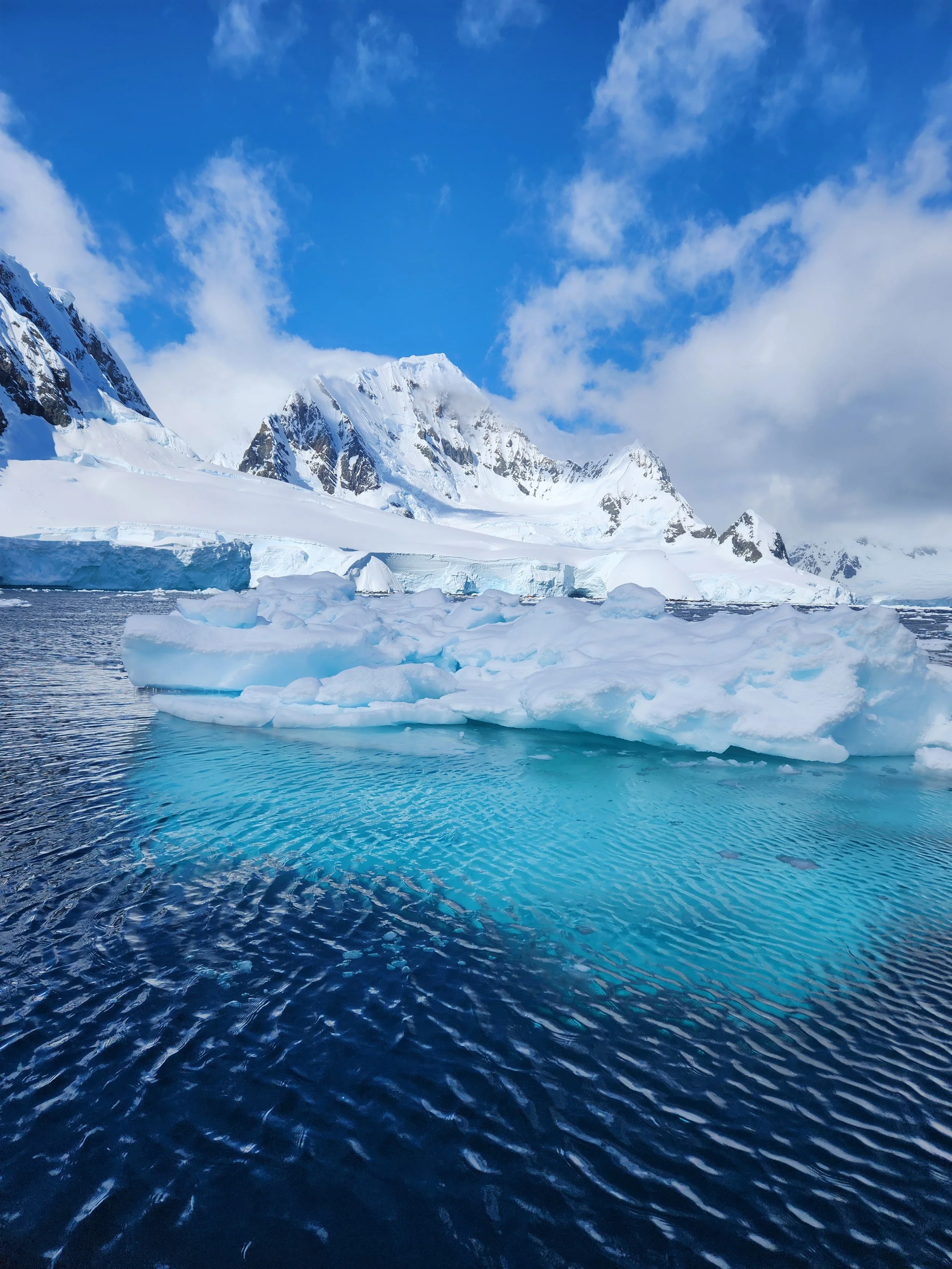
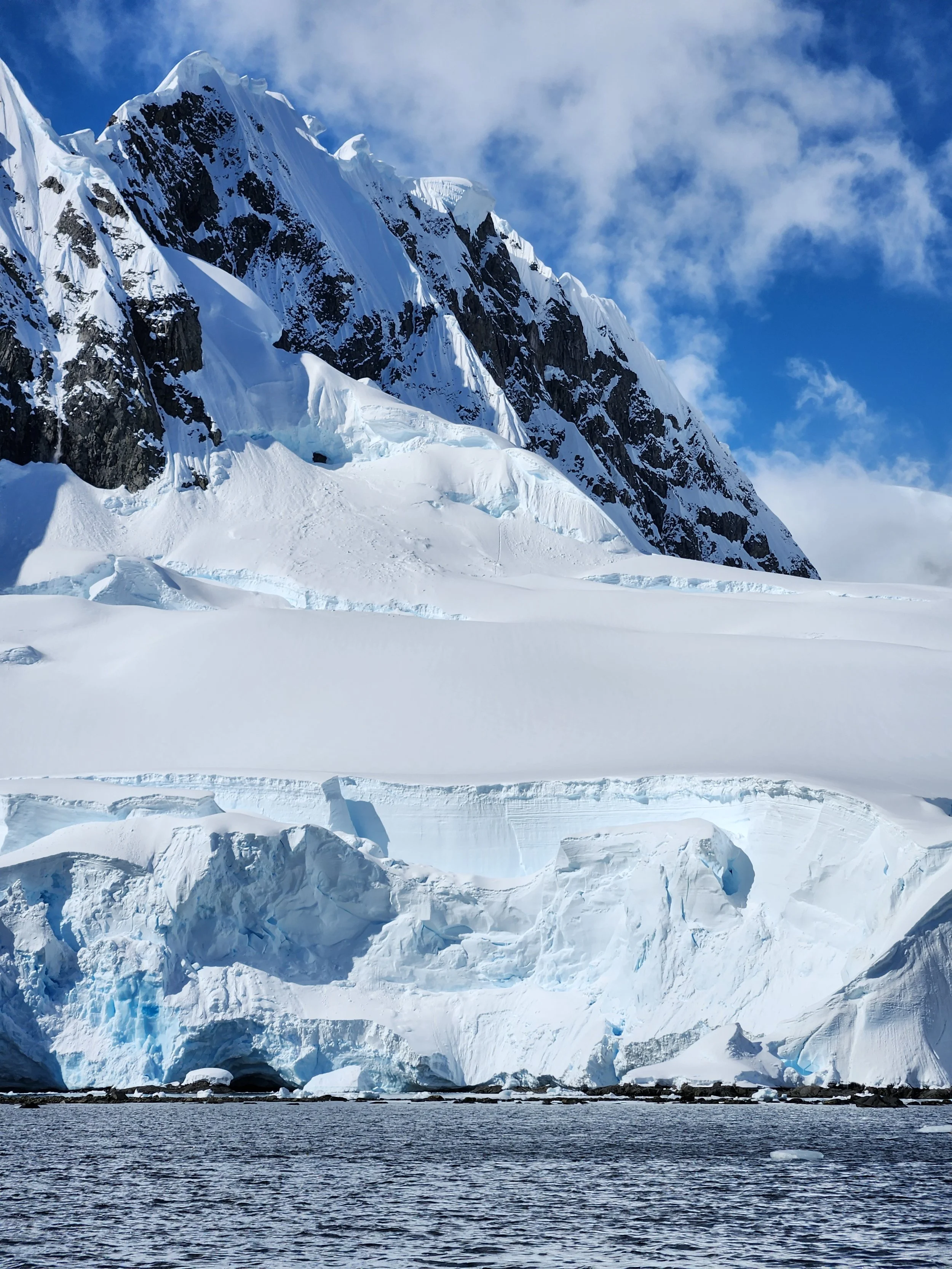
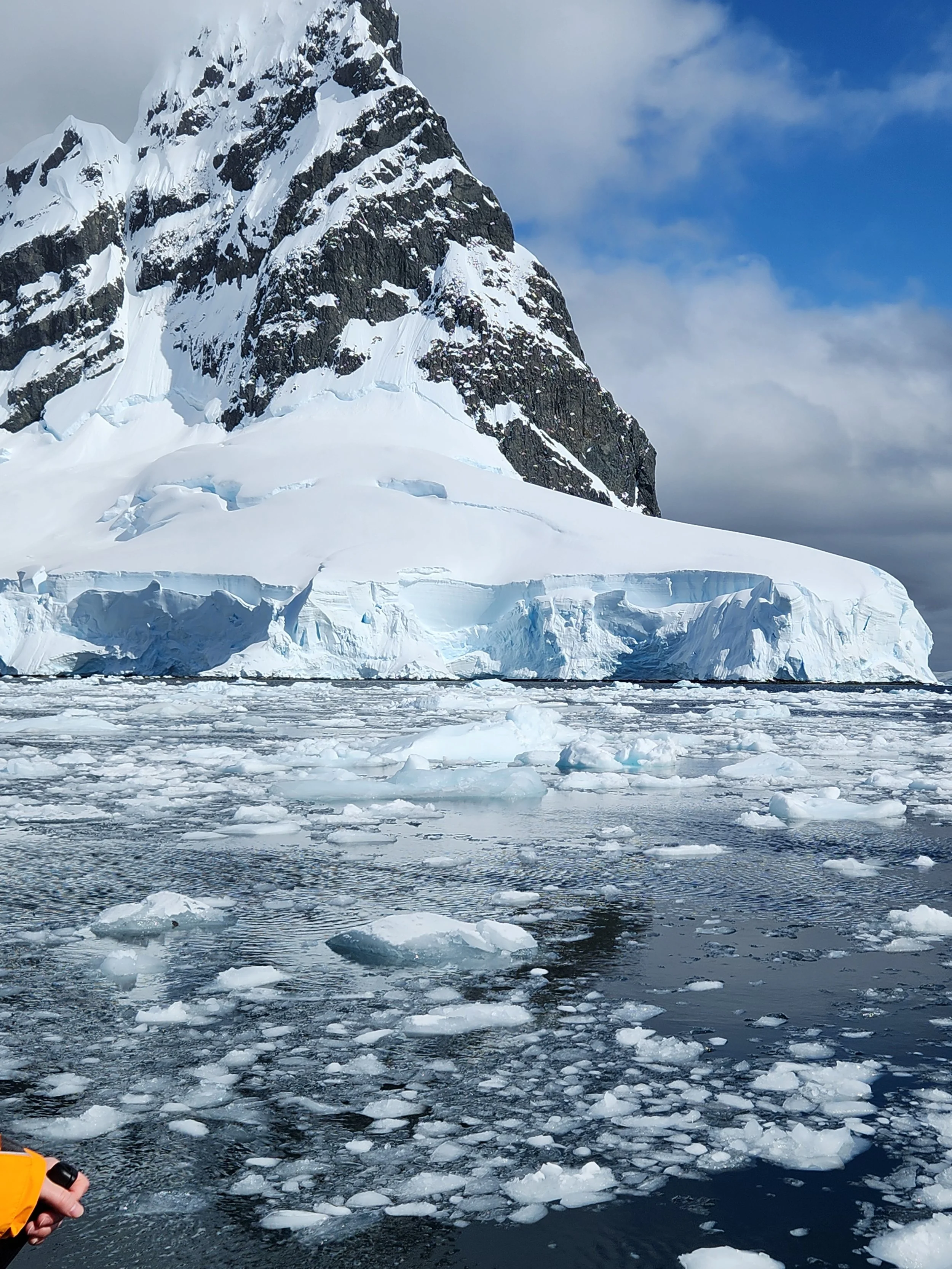
Hidden Bay offered some of the most dramatic scenery of the trip. From the ship, the mountains looked completely different depending on the angle, the light, and the ice in the water. Even from our balcony, we spotted seals resting on the ice.
Once ashore, our Zodiac guides maneuvered carefully through ice-filled waters so everyone could get photos of both sleeping seals and the surrounding landscape. This was also the perfect place to truly appreciate the scale of Antarctica — tiny Zodiacs dwarfed by massive icebergs and towering mountains.
Here, we finally got an incredible view of ice both above and below the water, showcasing just how much of an iceberg remains hidden beneath the surface.
Scenic Cruising the Lemaire Channel
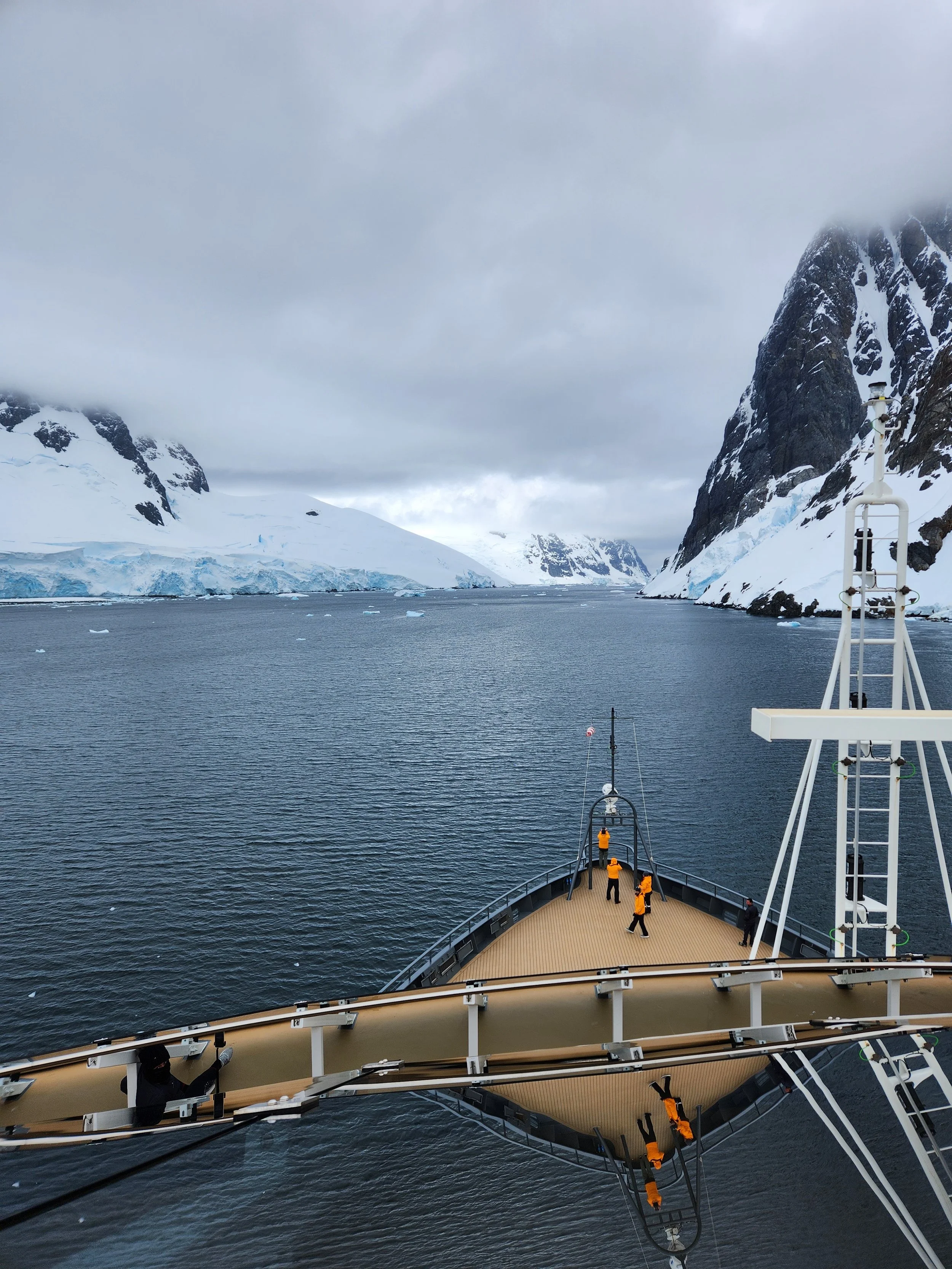
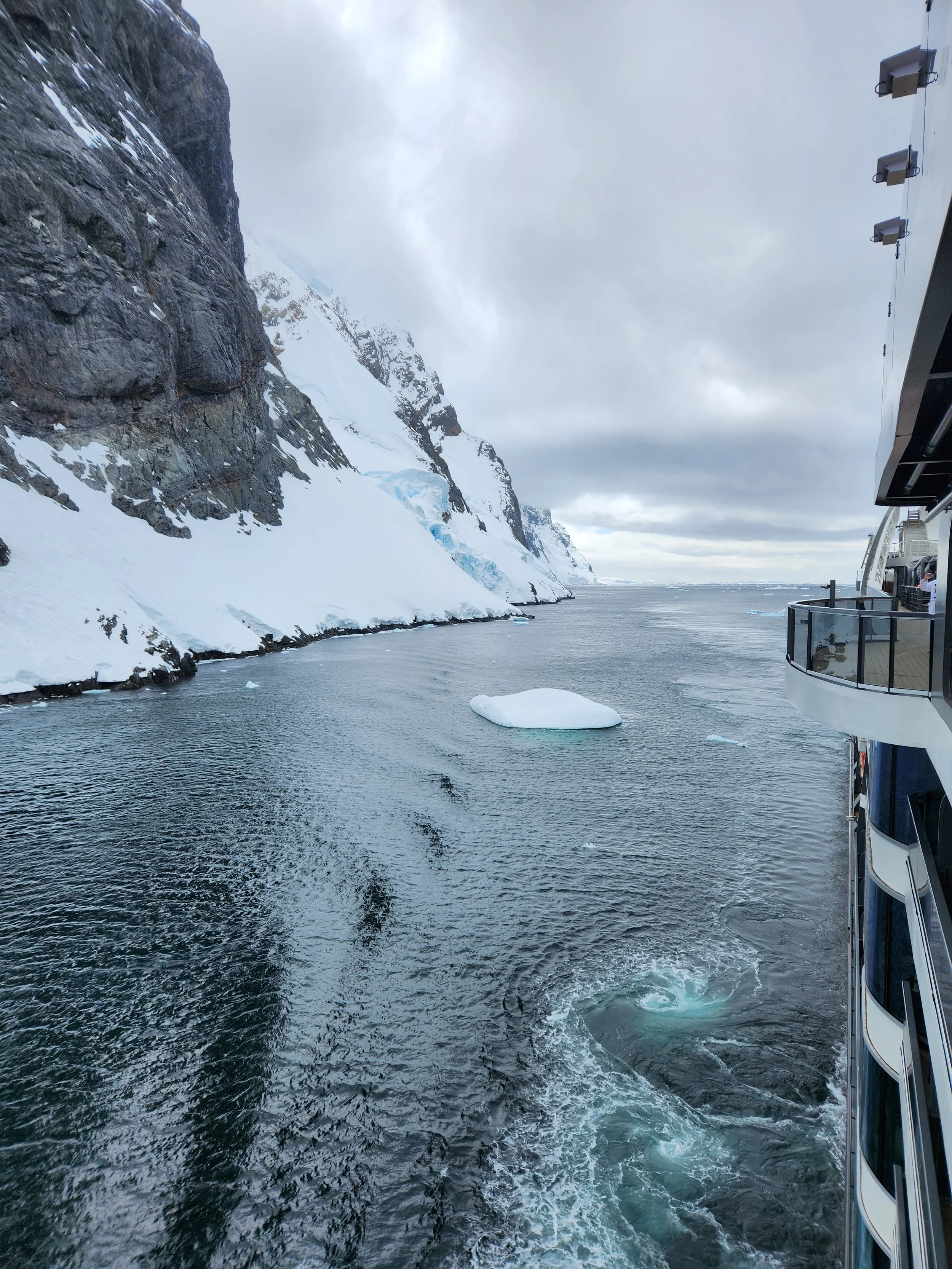
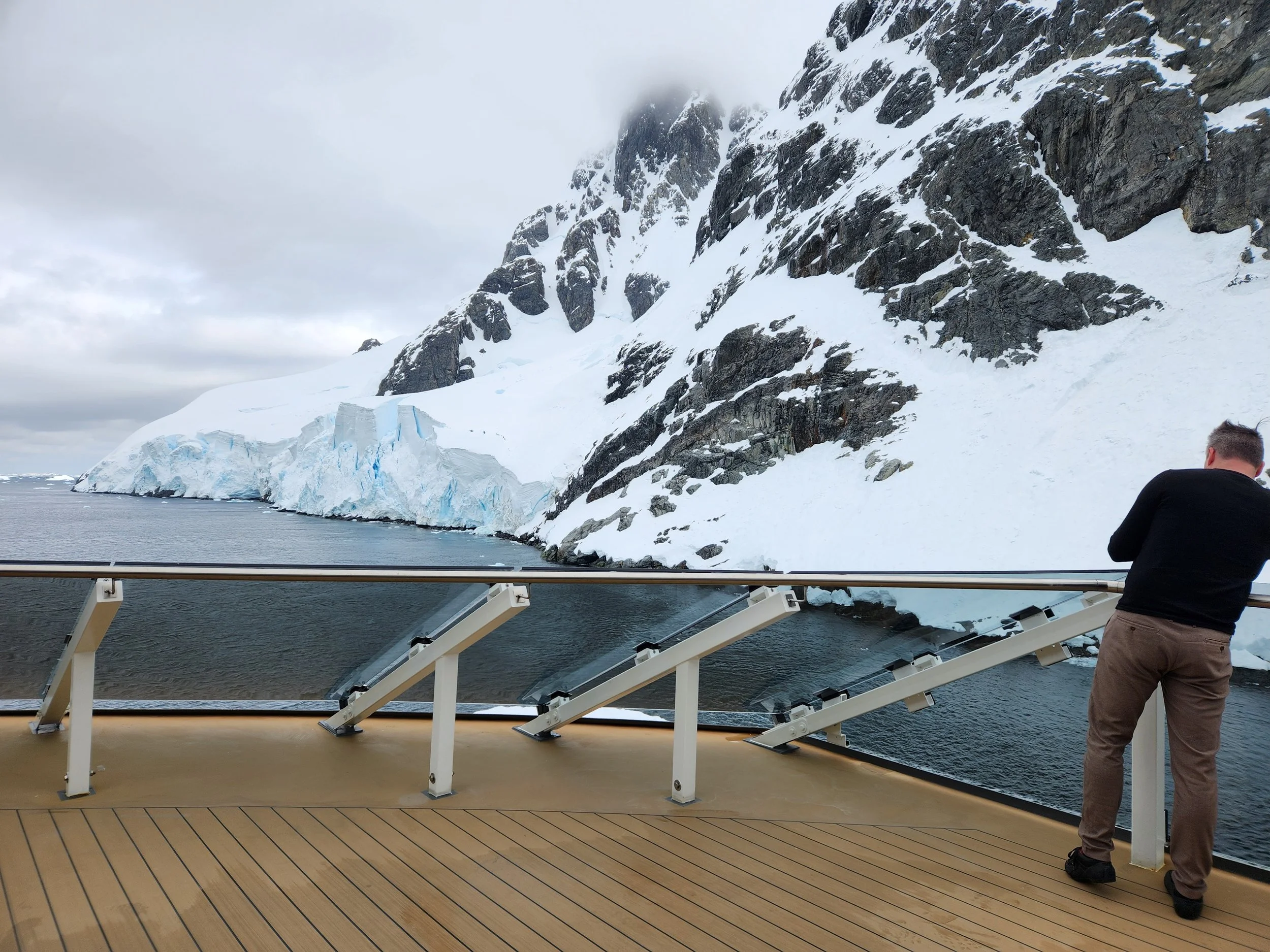
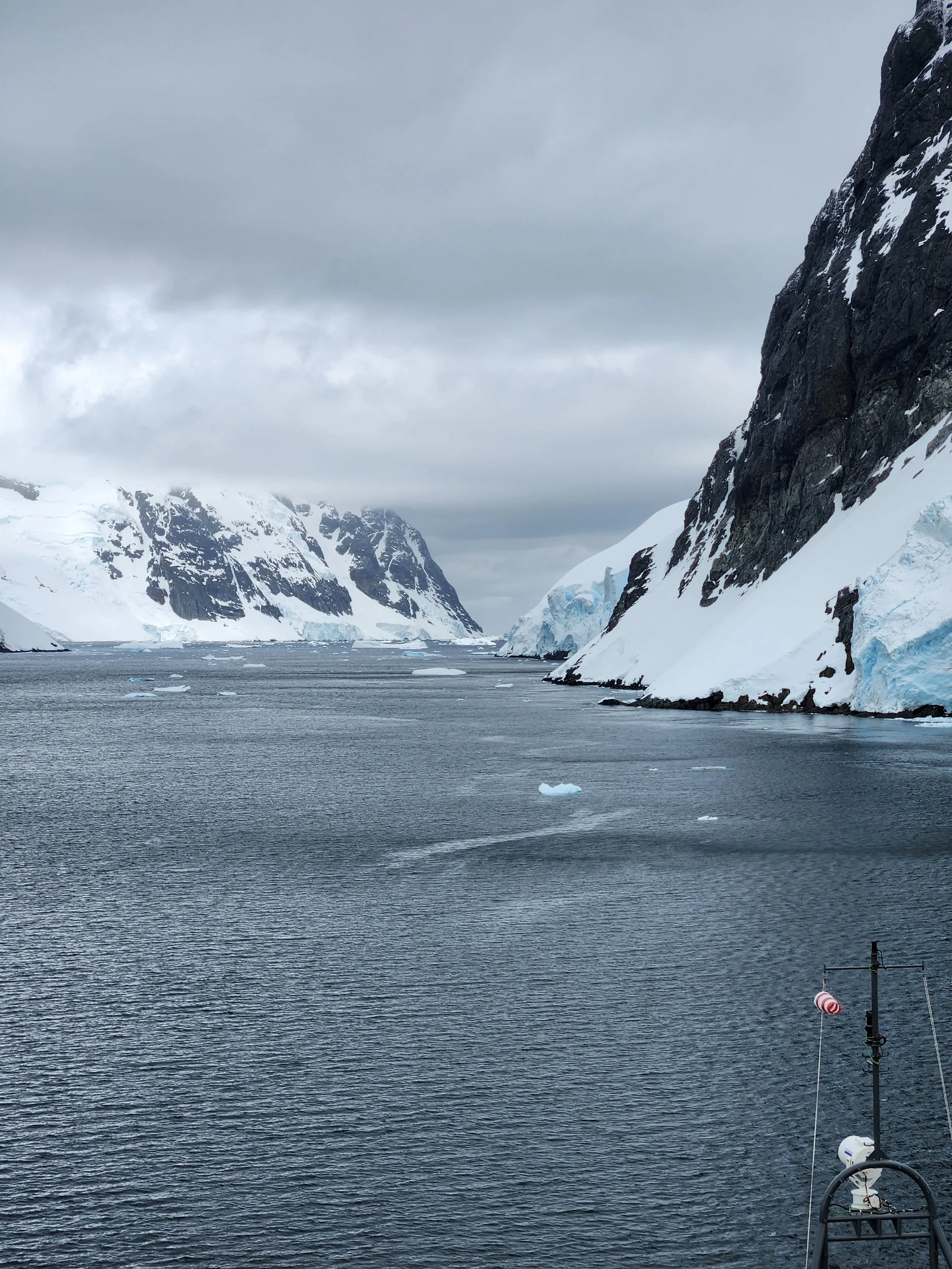
After leaving Hidden Bay, our ship set off on a scenic cruise through the Lemaire Channel, one of Antarctica’s most famous and photogenic waterways.
The channel is deep enough for expedition ships to pass through, but so narrow that the captain must navigate carefully to avoid icebergs on either side. At times, it felt like we could almost reach out and touch the ice or the rocky shoreline.
The Lemaire Channel is also known for whale sightings, and it absolutely delivered. We were lucky enough to spot humpback whales, making this already spectacular cruise even more memorable.
Port Charcot: Penguins & Antarctic History
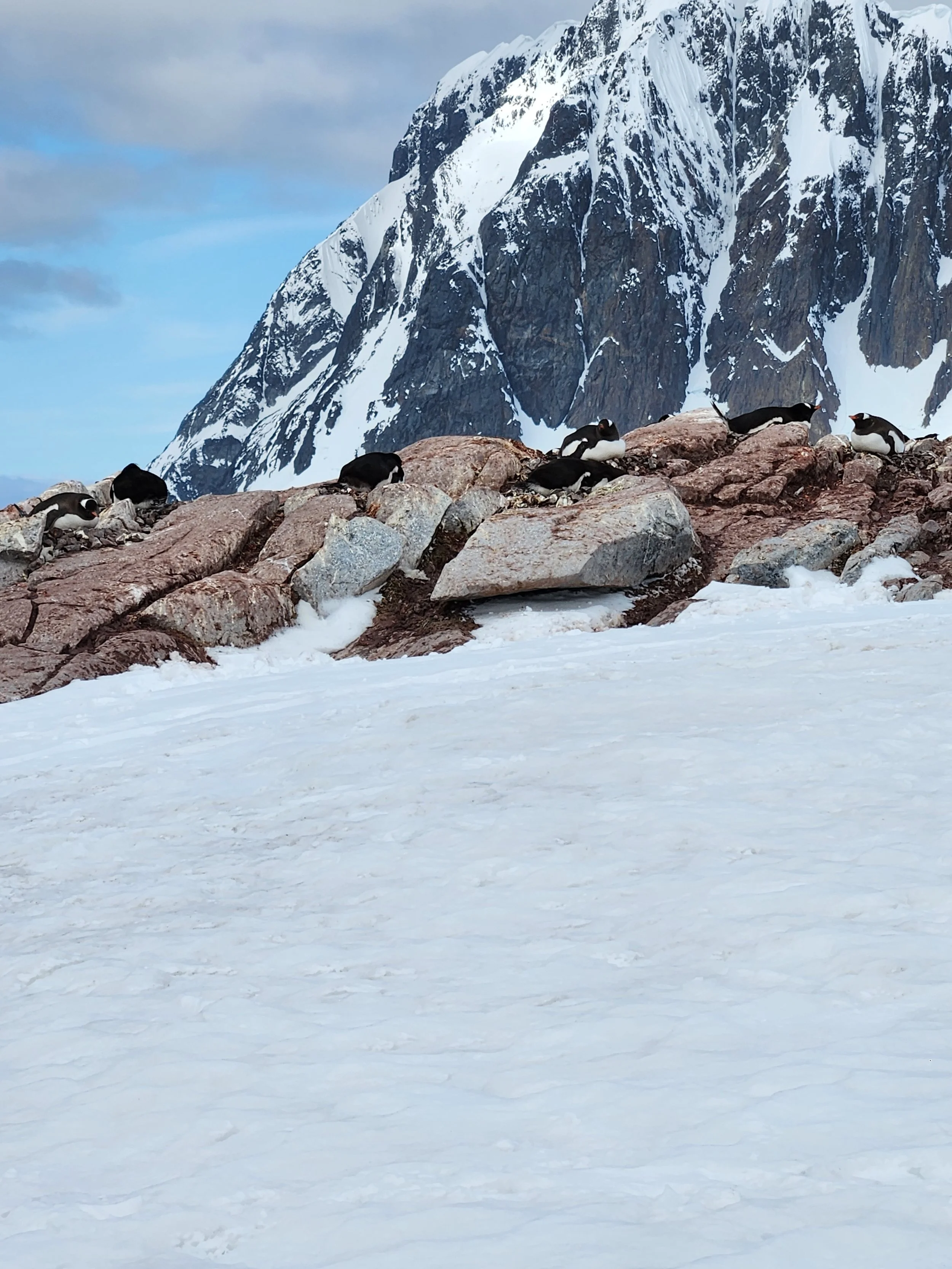
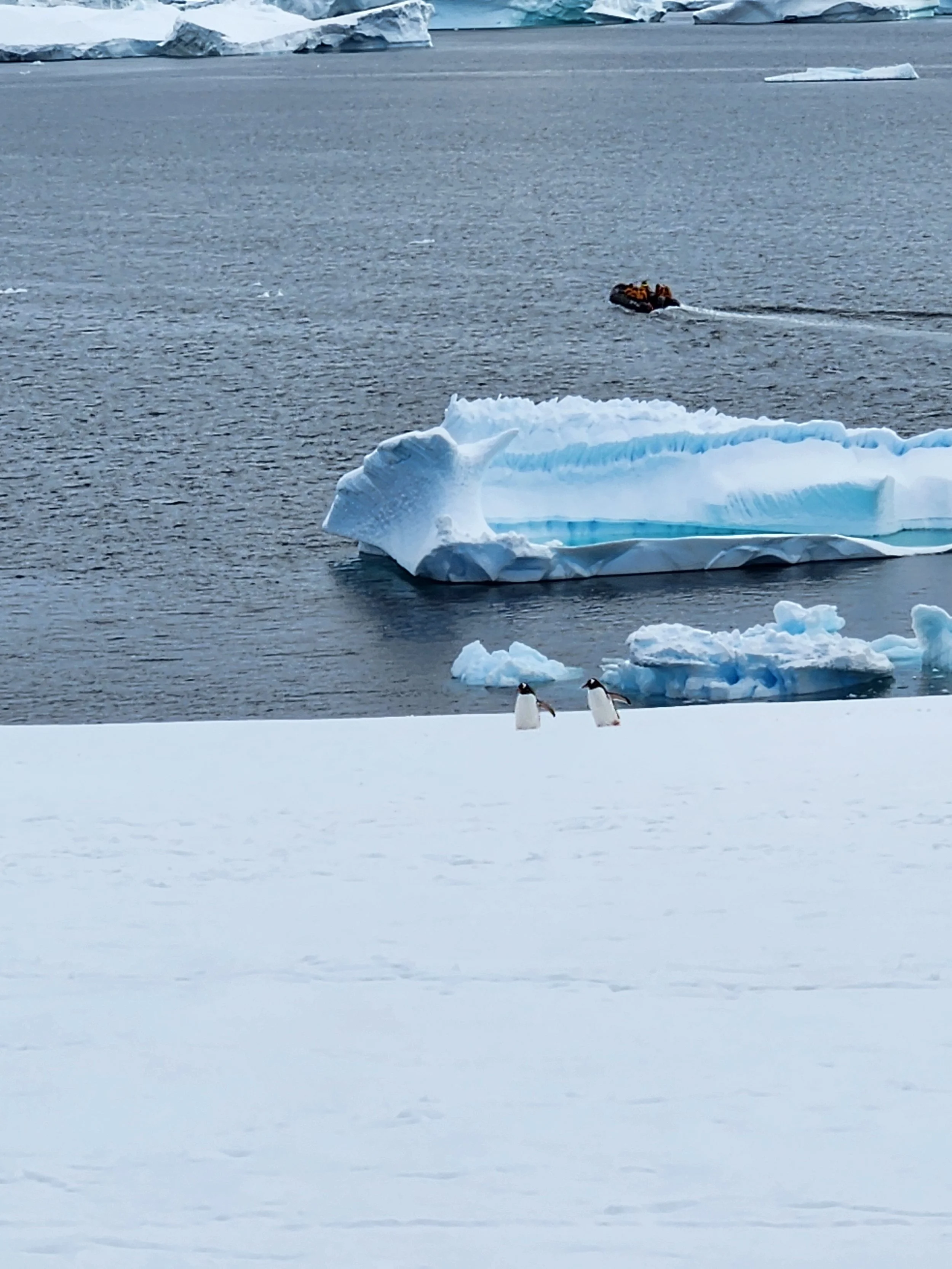
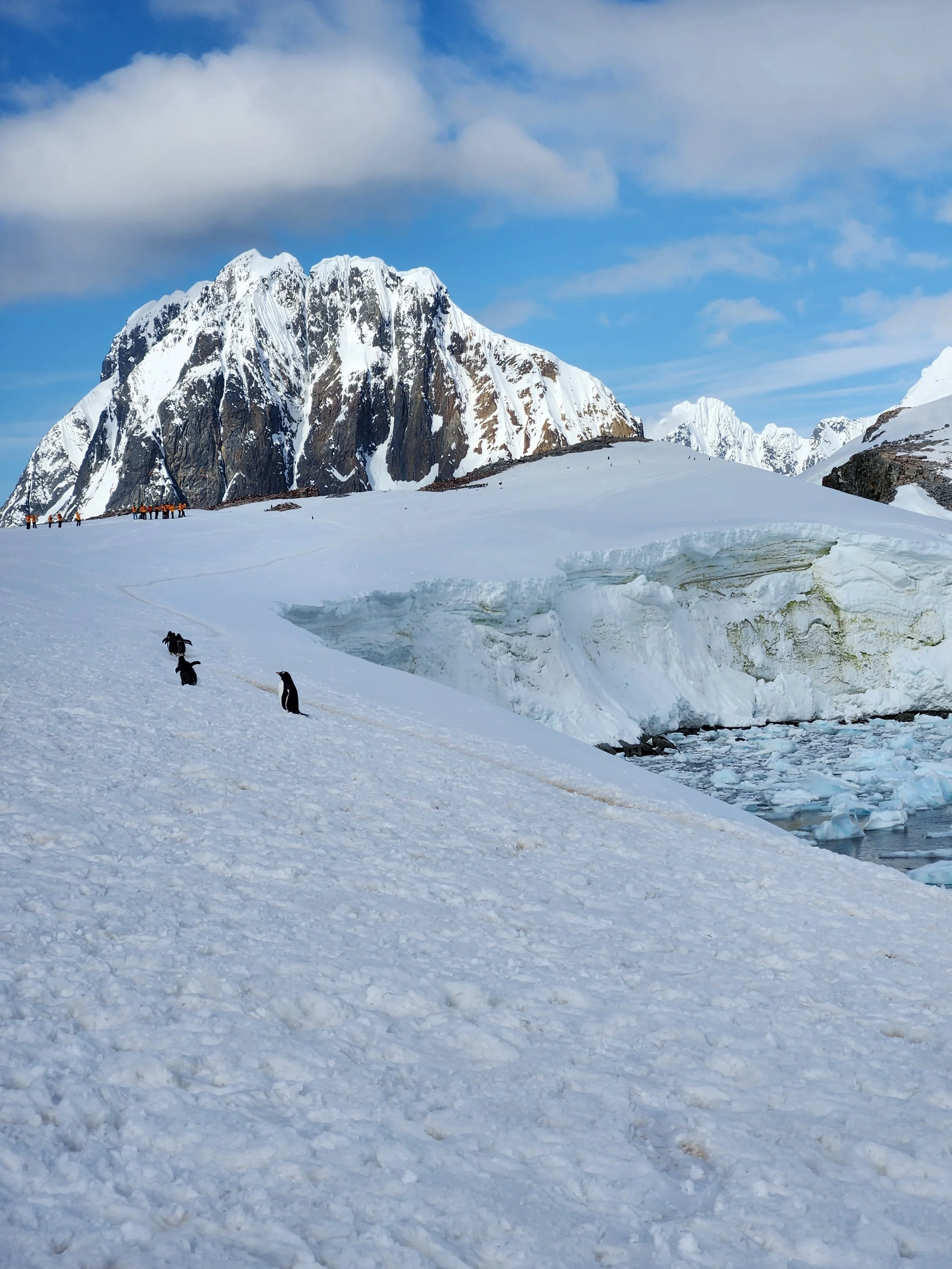
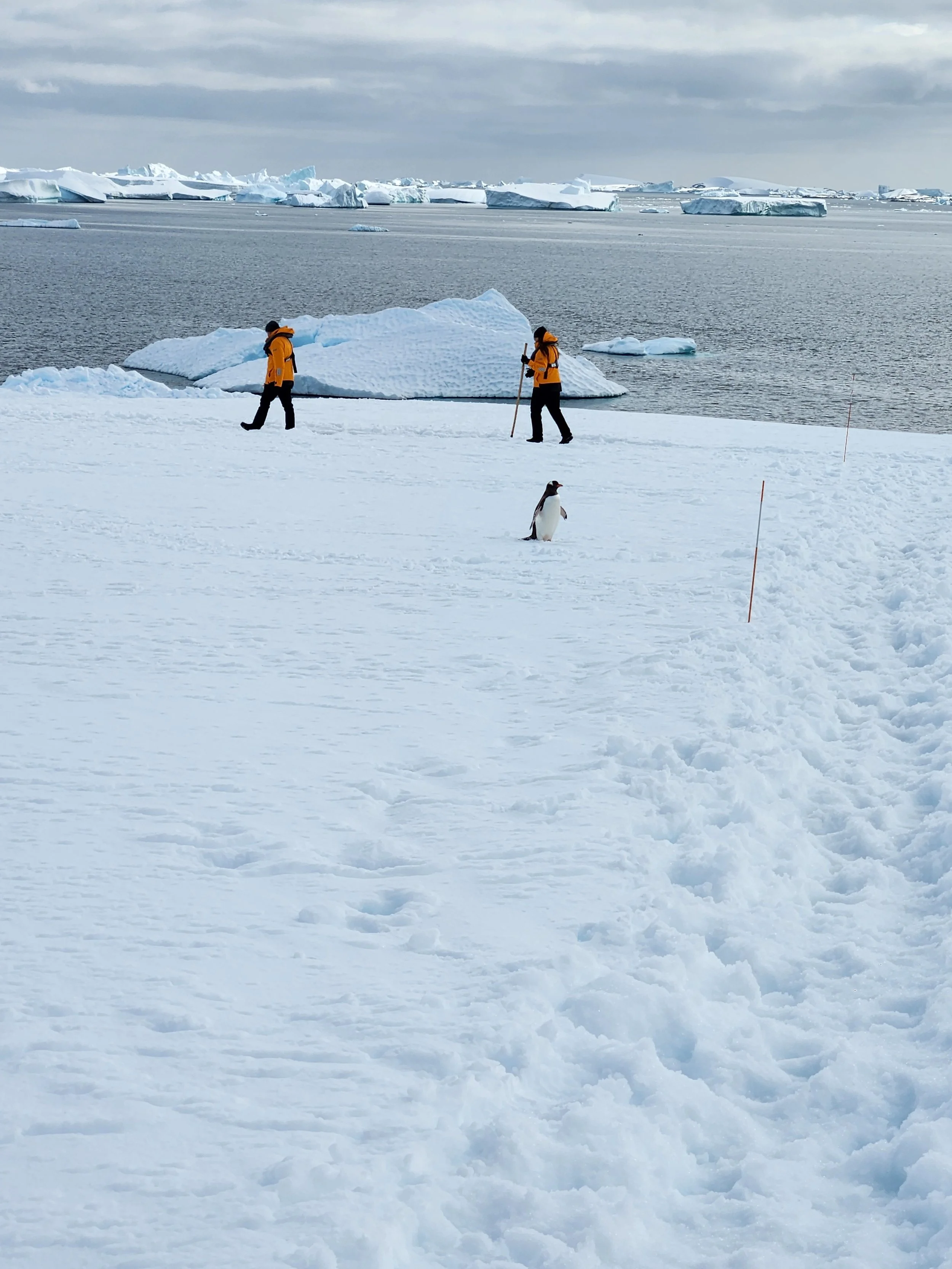
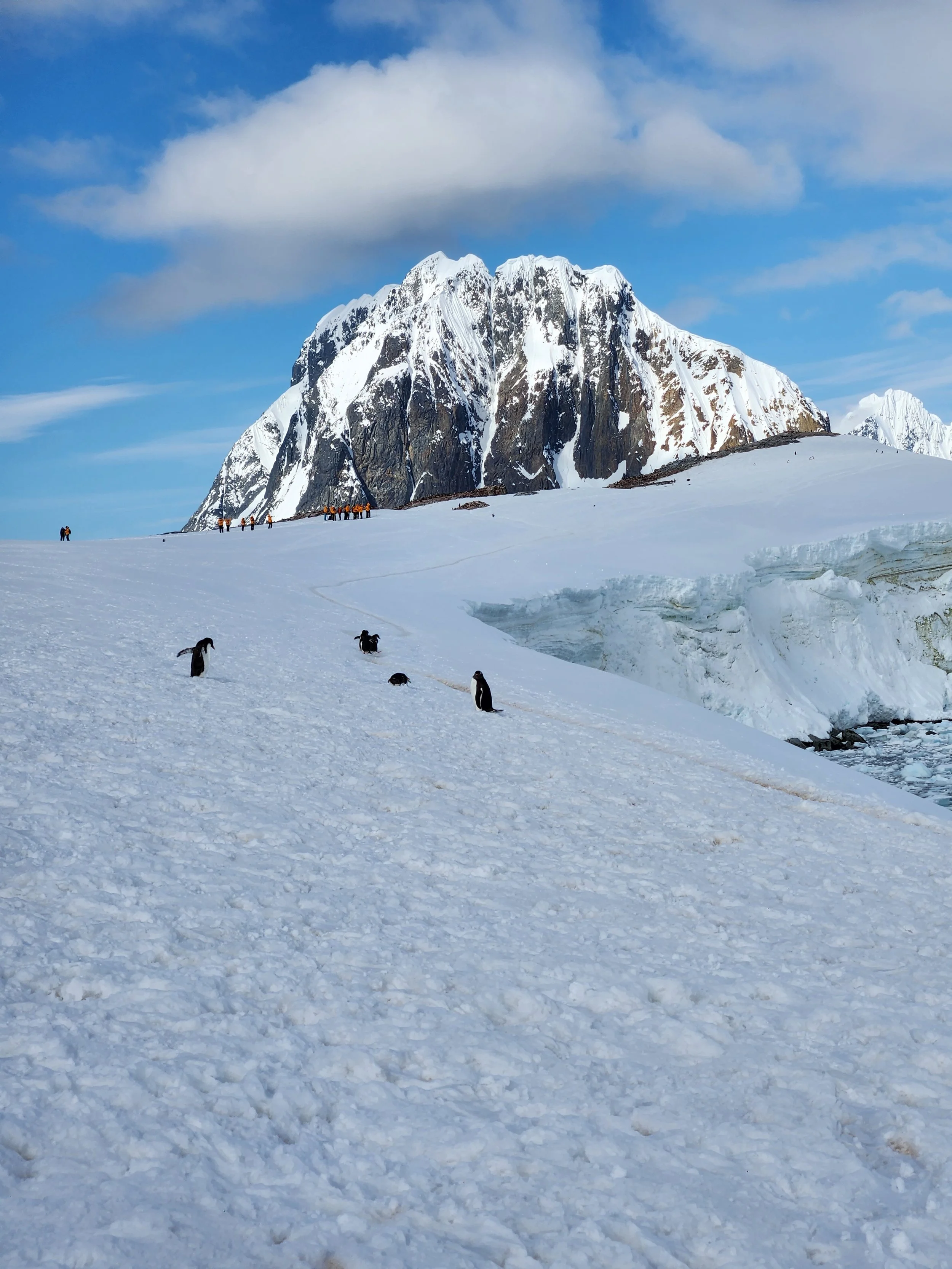
The Lemaire Channel led us to Port Charcot, named after French explorer Jean-Baptiste Charcot, who conducted scientific expeditions in this region in the early 1900s.
We knew this would be our final penguin colony landing, so we spent extra time watching and filming these endlessly entertaining birds. Gentoo and chinstrap penguins dotted the landscape, offering a fitting farewell to our Antarctic wildlife encounters.

Christmas Eve at Sea & Arriving at Deception Island
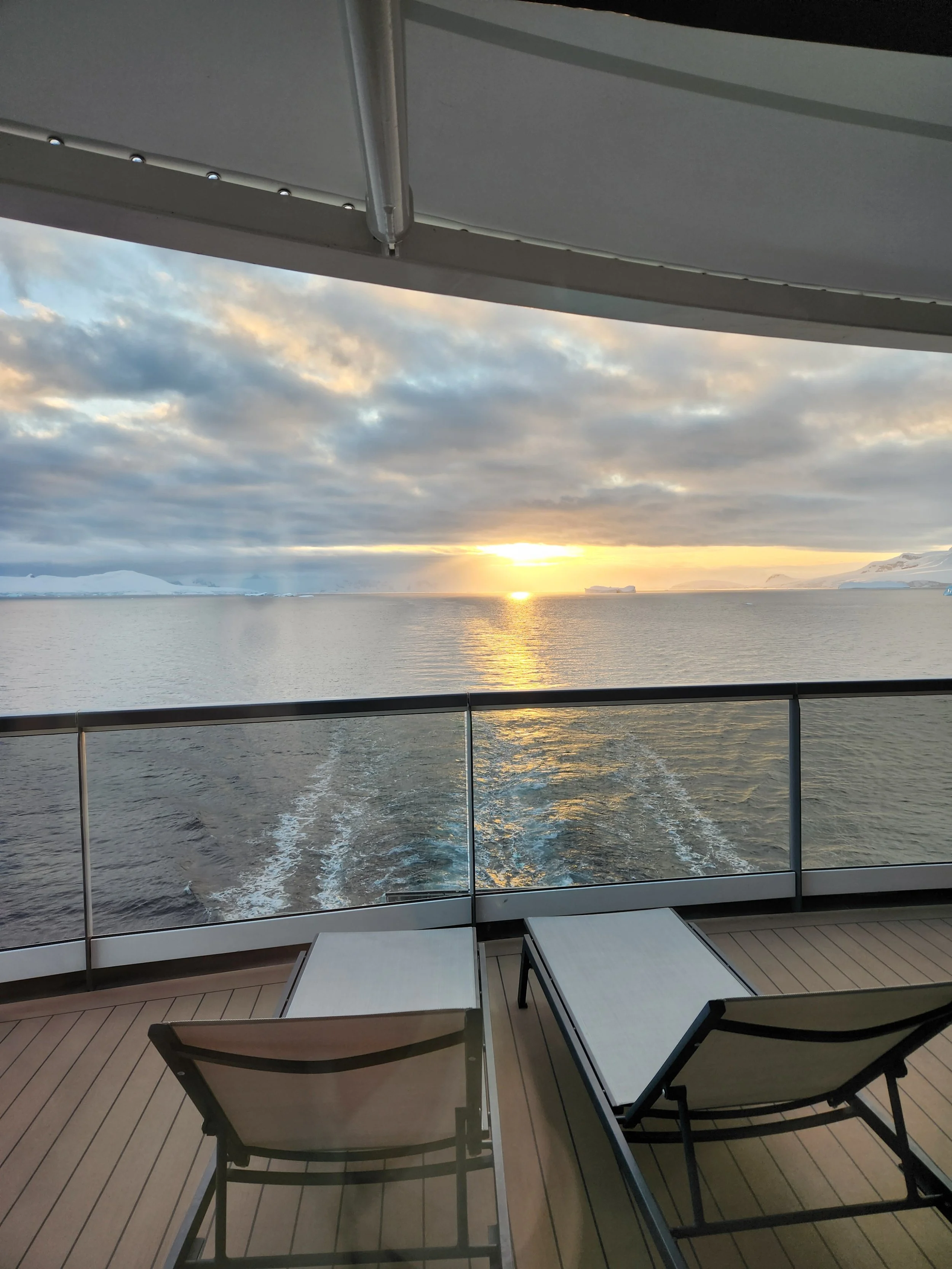
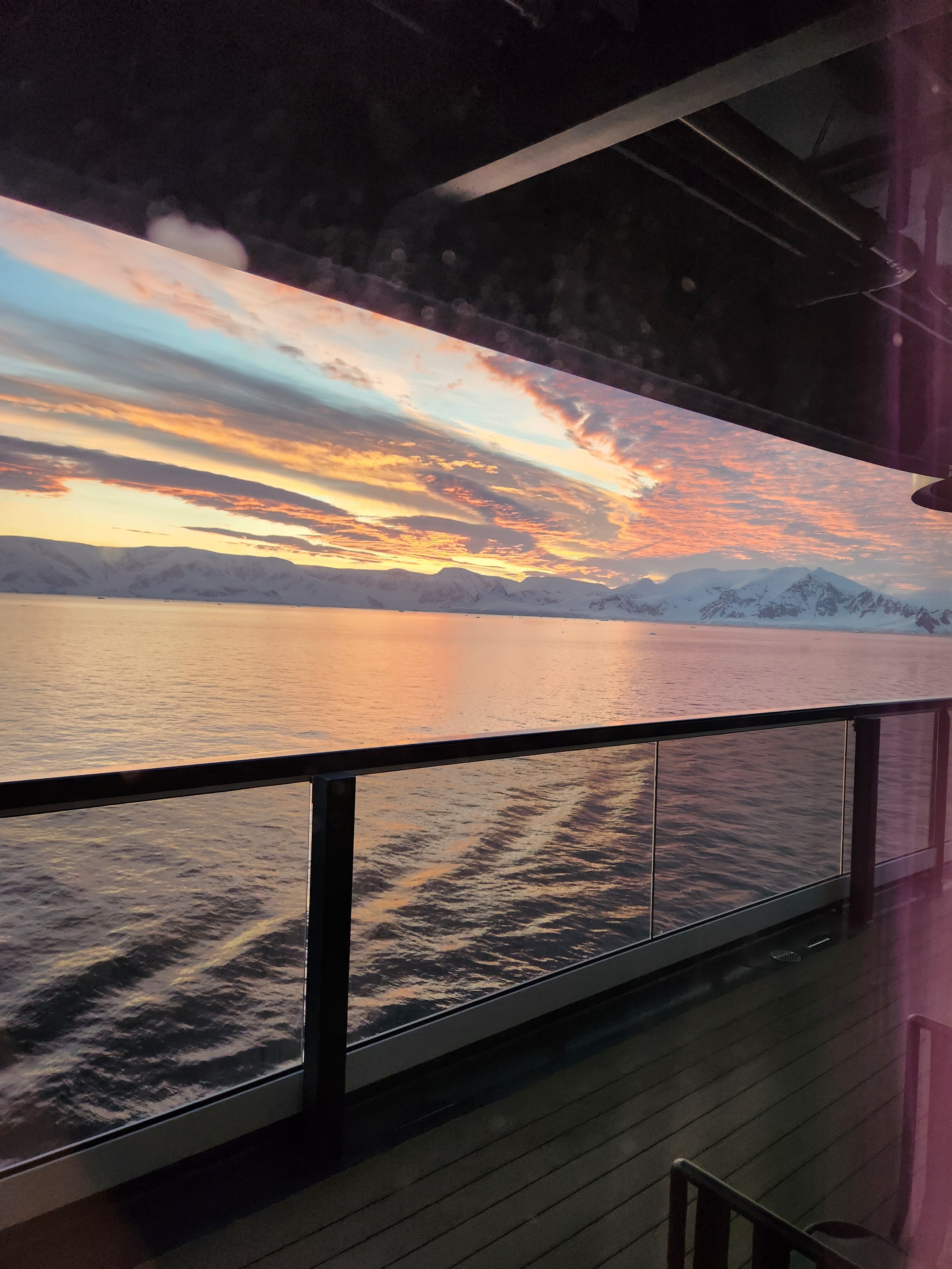
That evening, as we sailed toward our next destination, I stayed up late on Christmas Eve hoping to spot Santa. While I didn’t see him, I did witness something almost as magical — sunset at 1:00 a.m. and sunrise at 2:00 a.m.
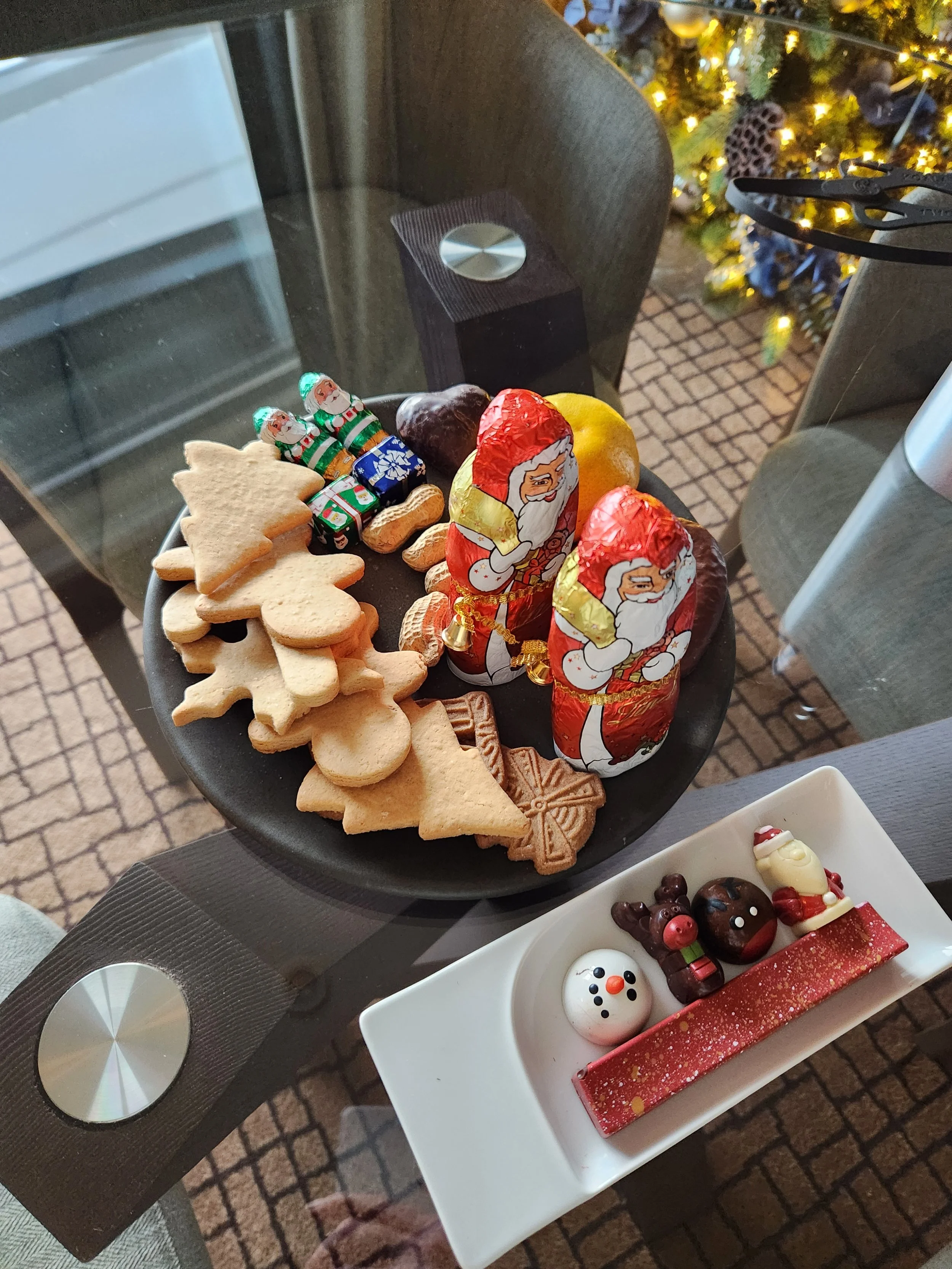
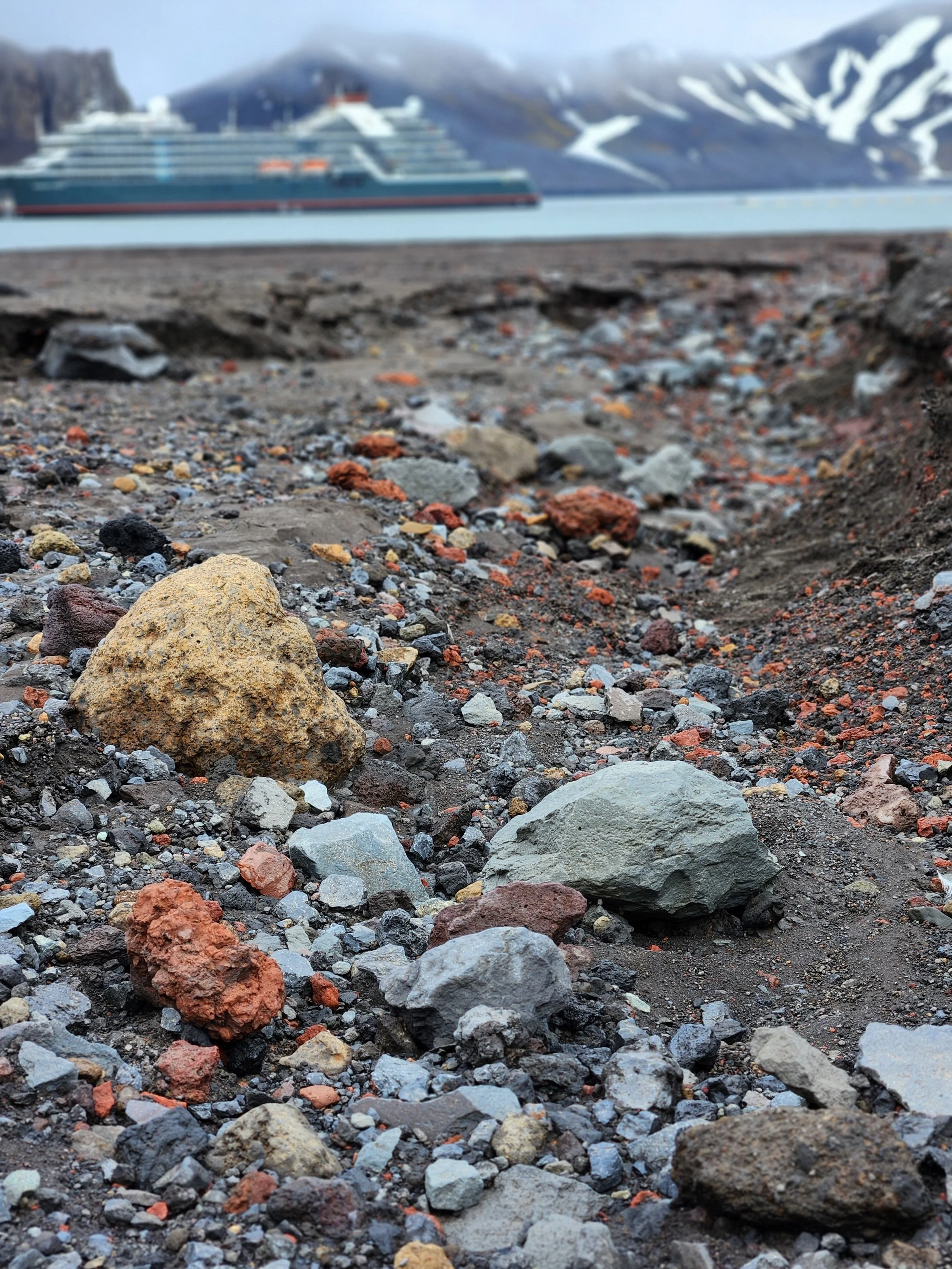
The next morning, we arrived at Deception Island, one of the most unique places in Antarctica. It’s the caldera of an active volcano and one of only two places in the world (the other being Santorini, Greece) where ships can sail directly into a volcanic caldera.
The Polar Plunge: Jumping Into Antarctic Waters
Deception Island is also where we faced our next challenge: the Polar Plunge.
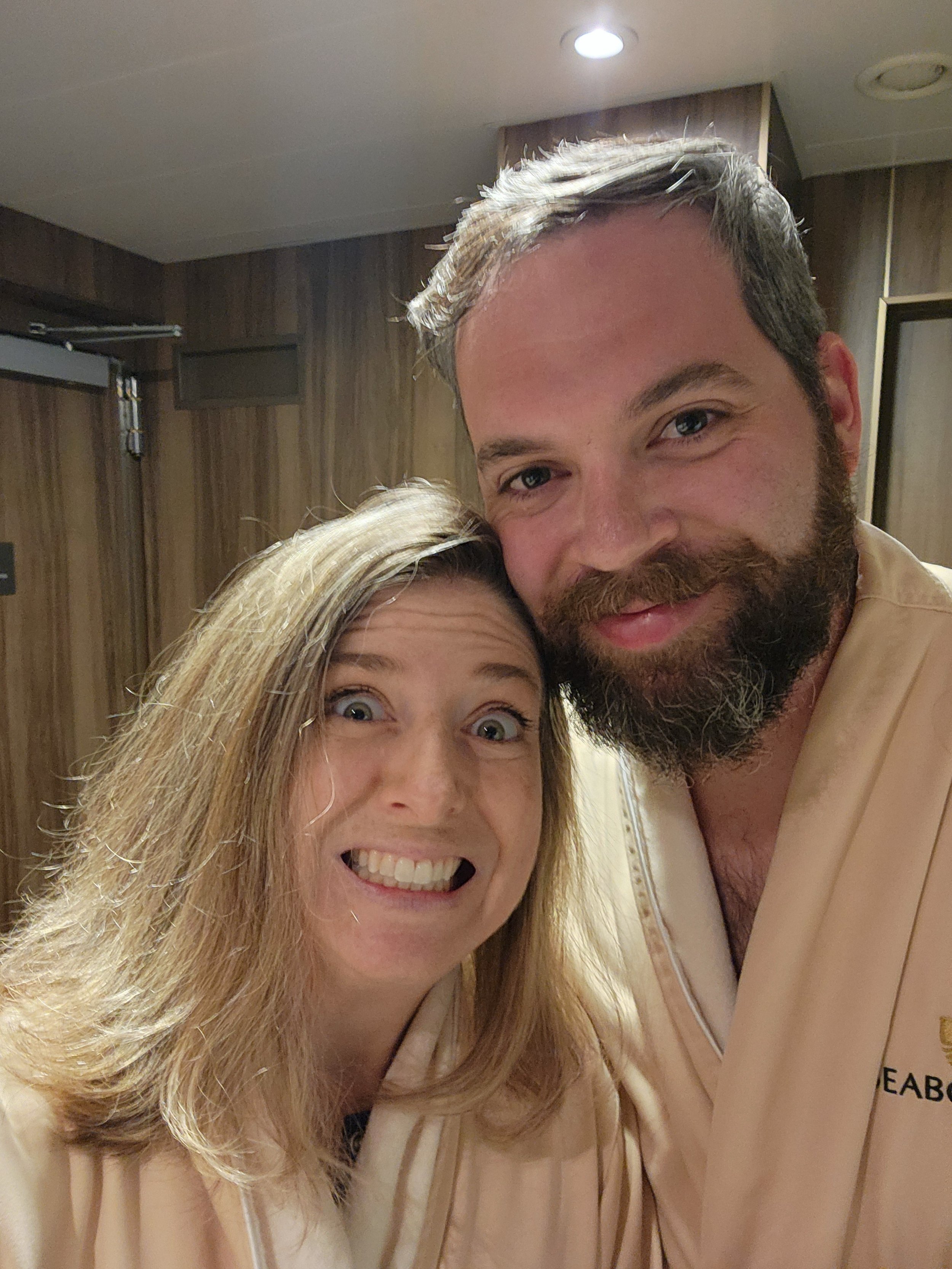
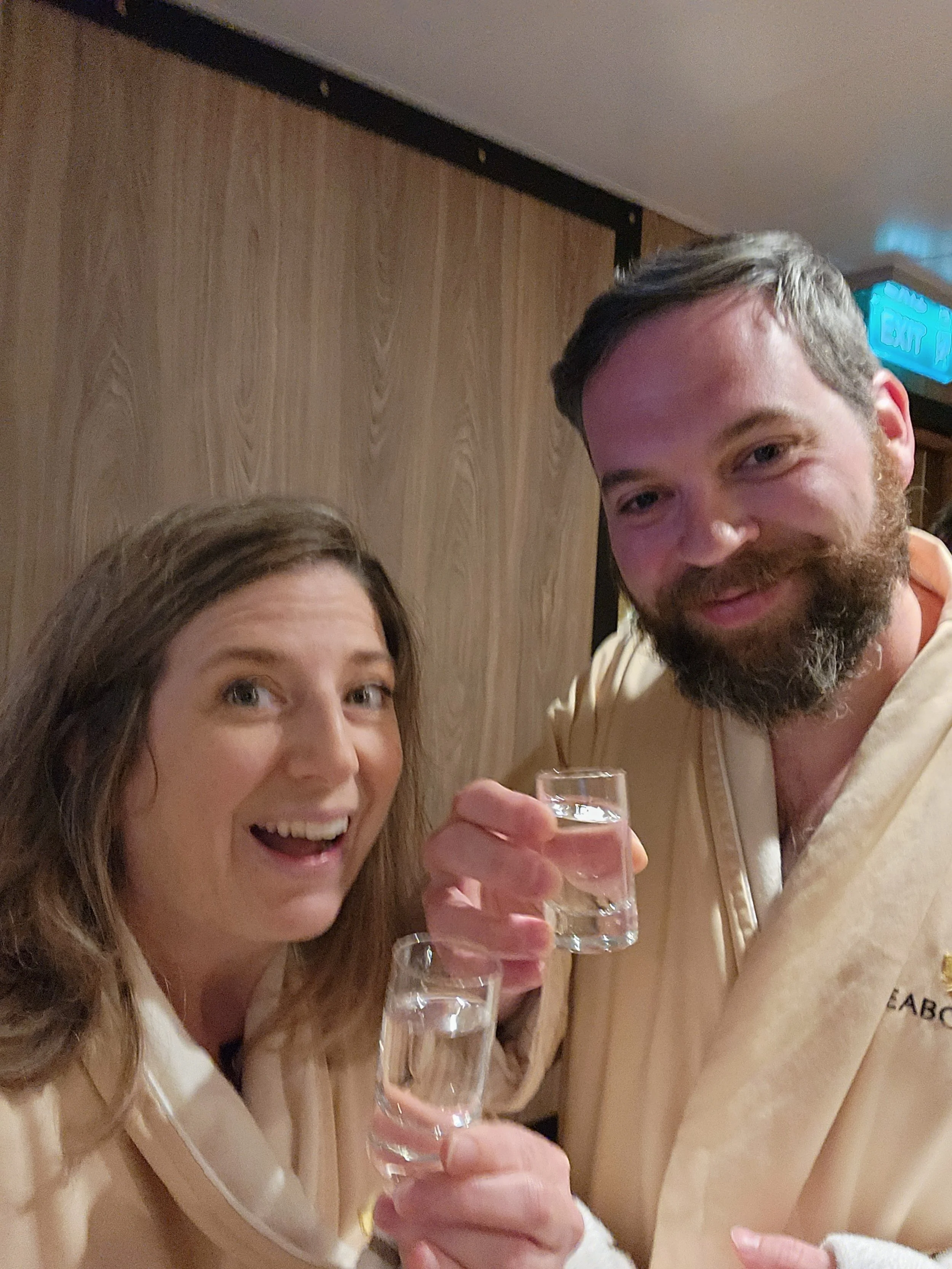
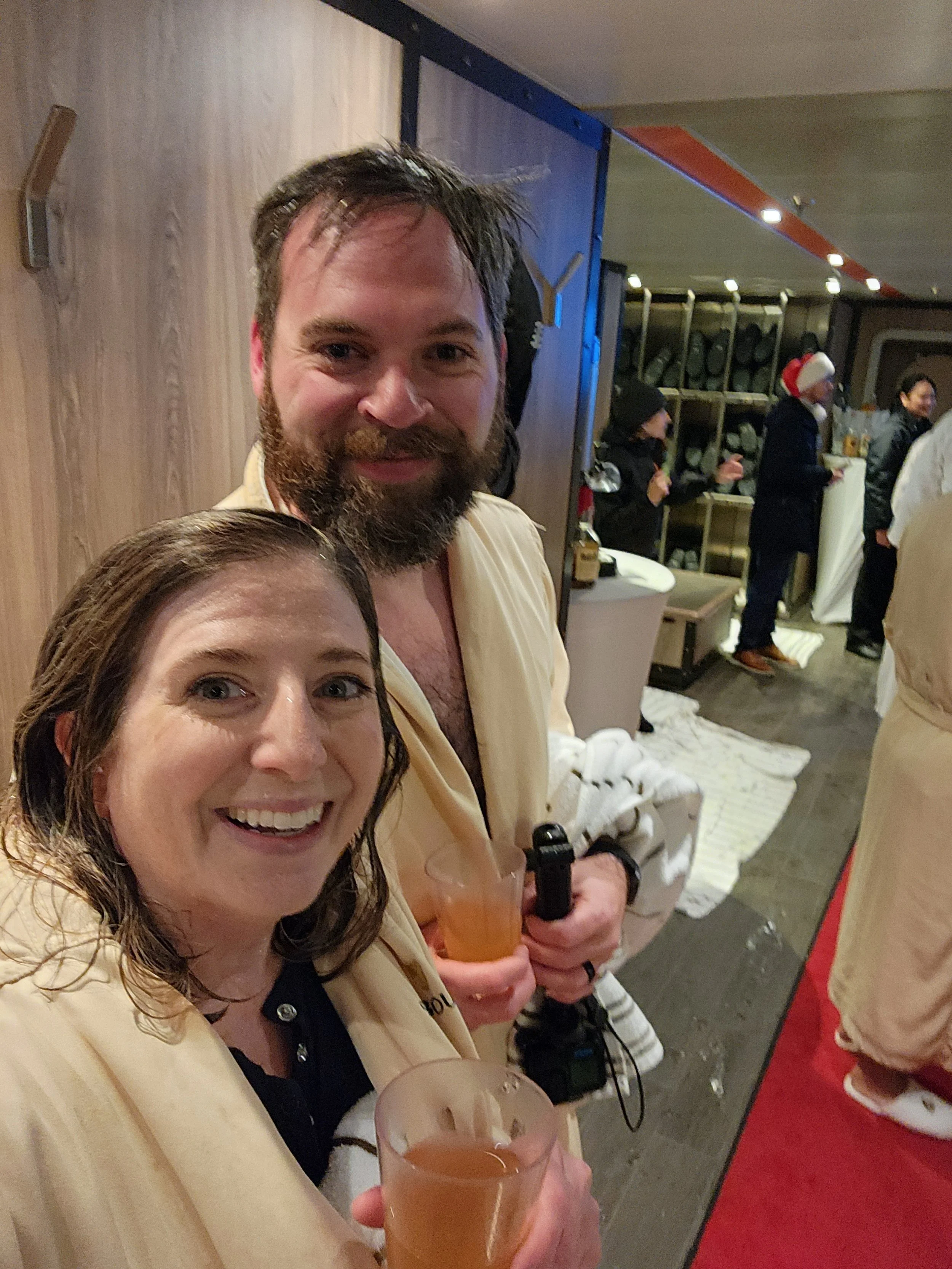
Jumping into freezing Antarctic water was not my idea of fun, but John was determined — and I wasn’t about to let him do it alone. The water was shockingly cold, but somehow once I got out, it didn’t feel quite as bad as I expected.
We survived.
I didn’t die.
And yes — we’d do it again.
Final Landing on Deception Island
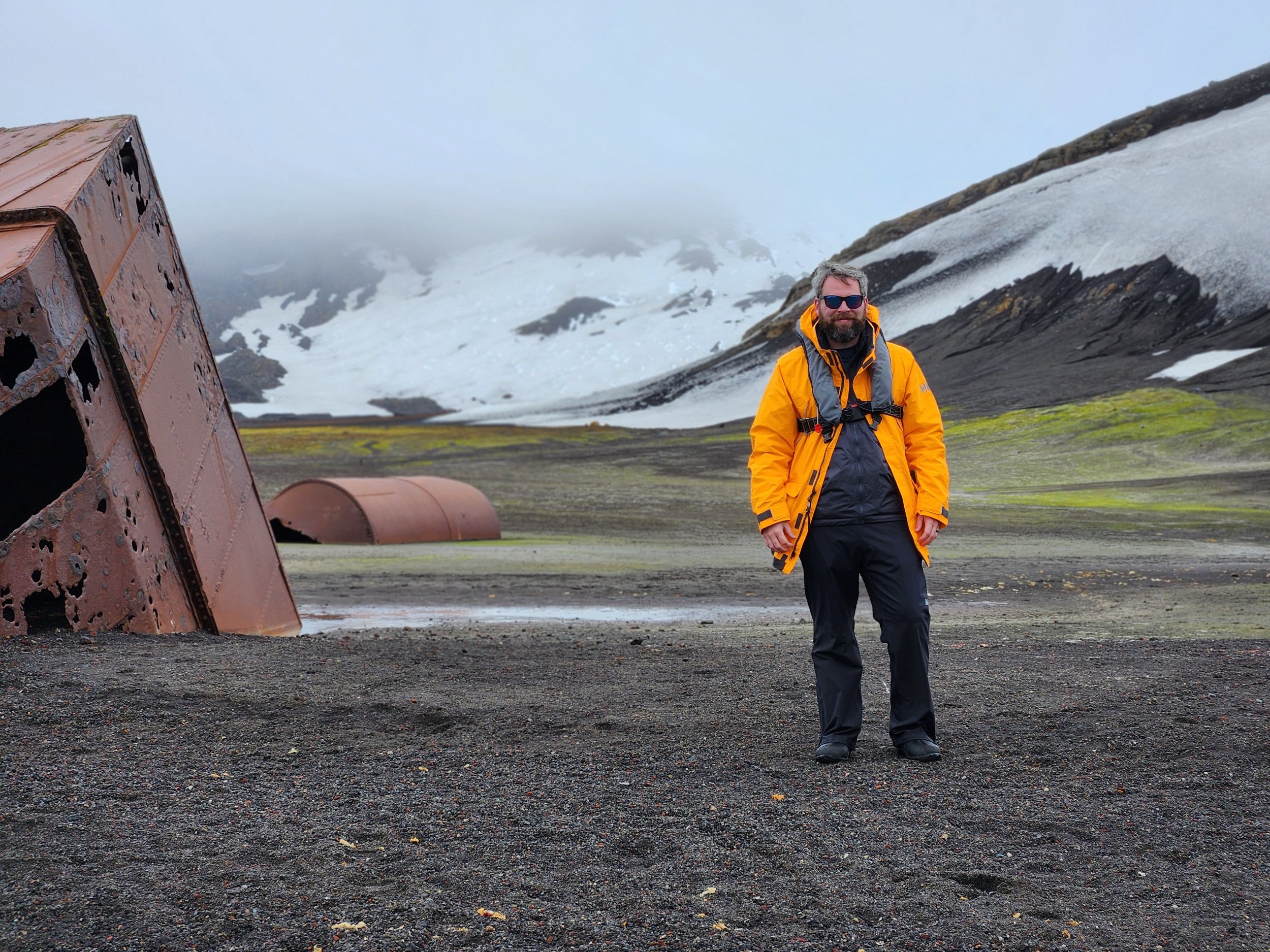
Our last disembarkation took place on Deception Island itself. Because it’s an active volcano, the ground beneath the rocks is actually warm if you dig down a few inches.
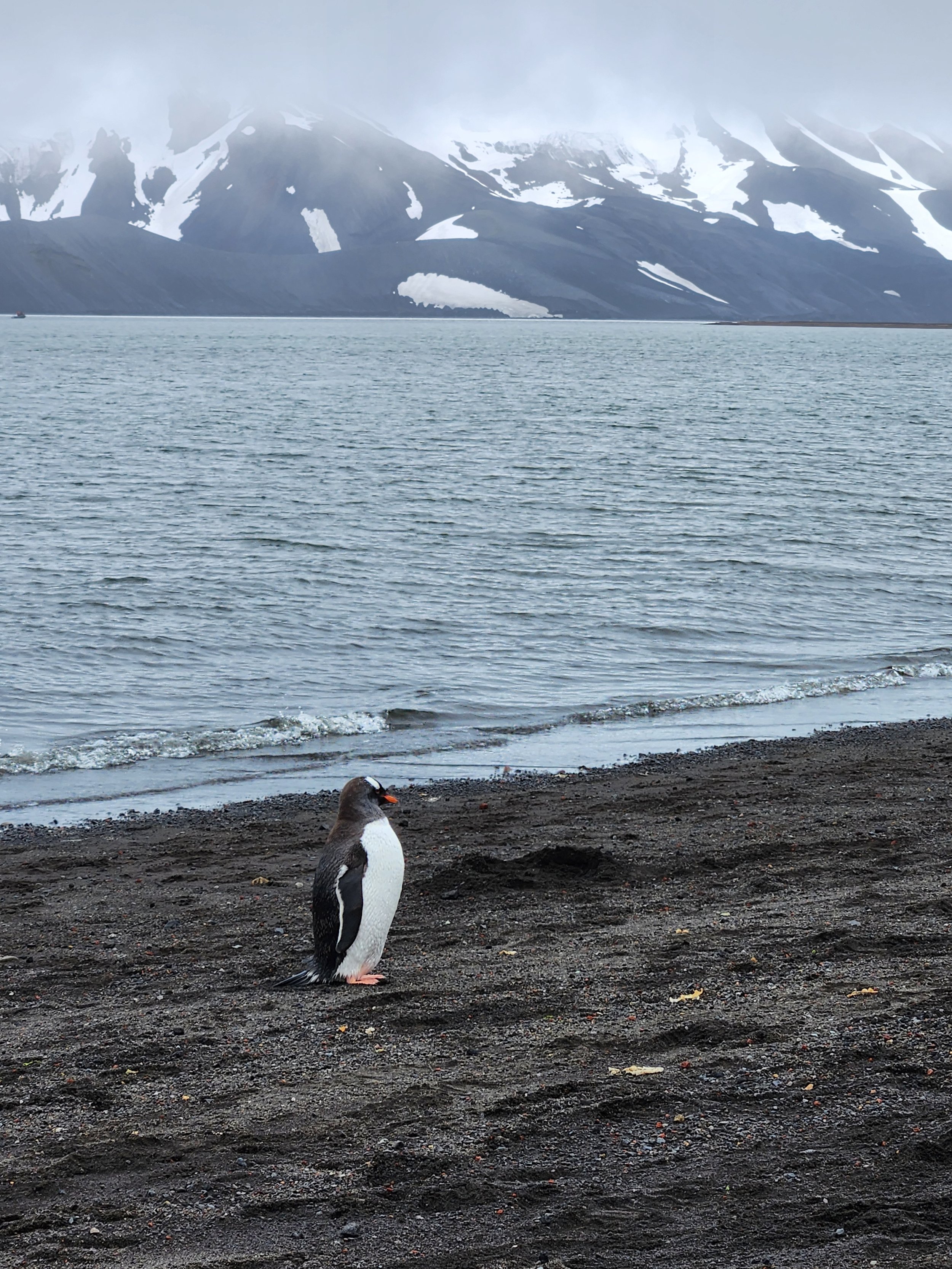
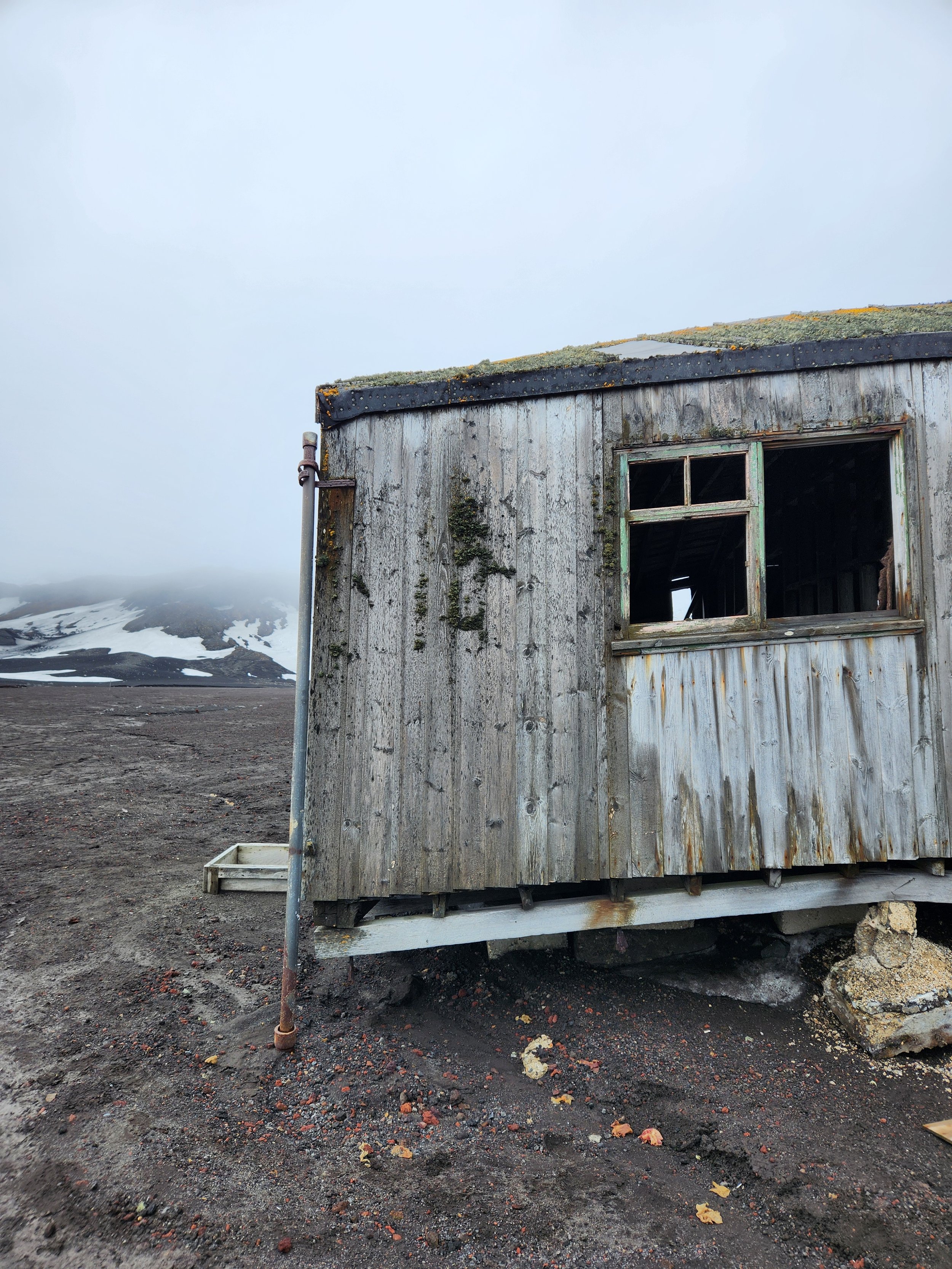
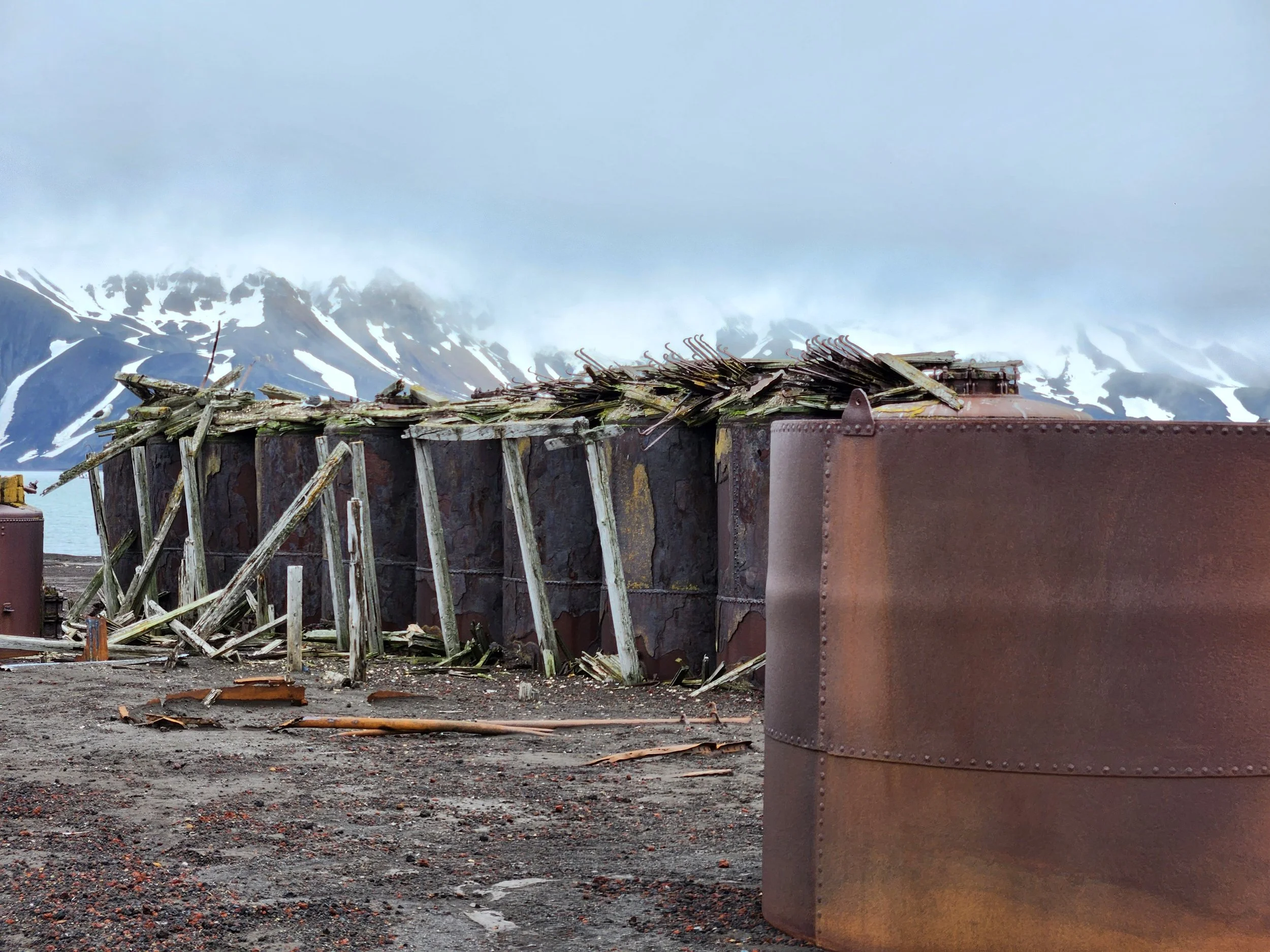
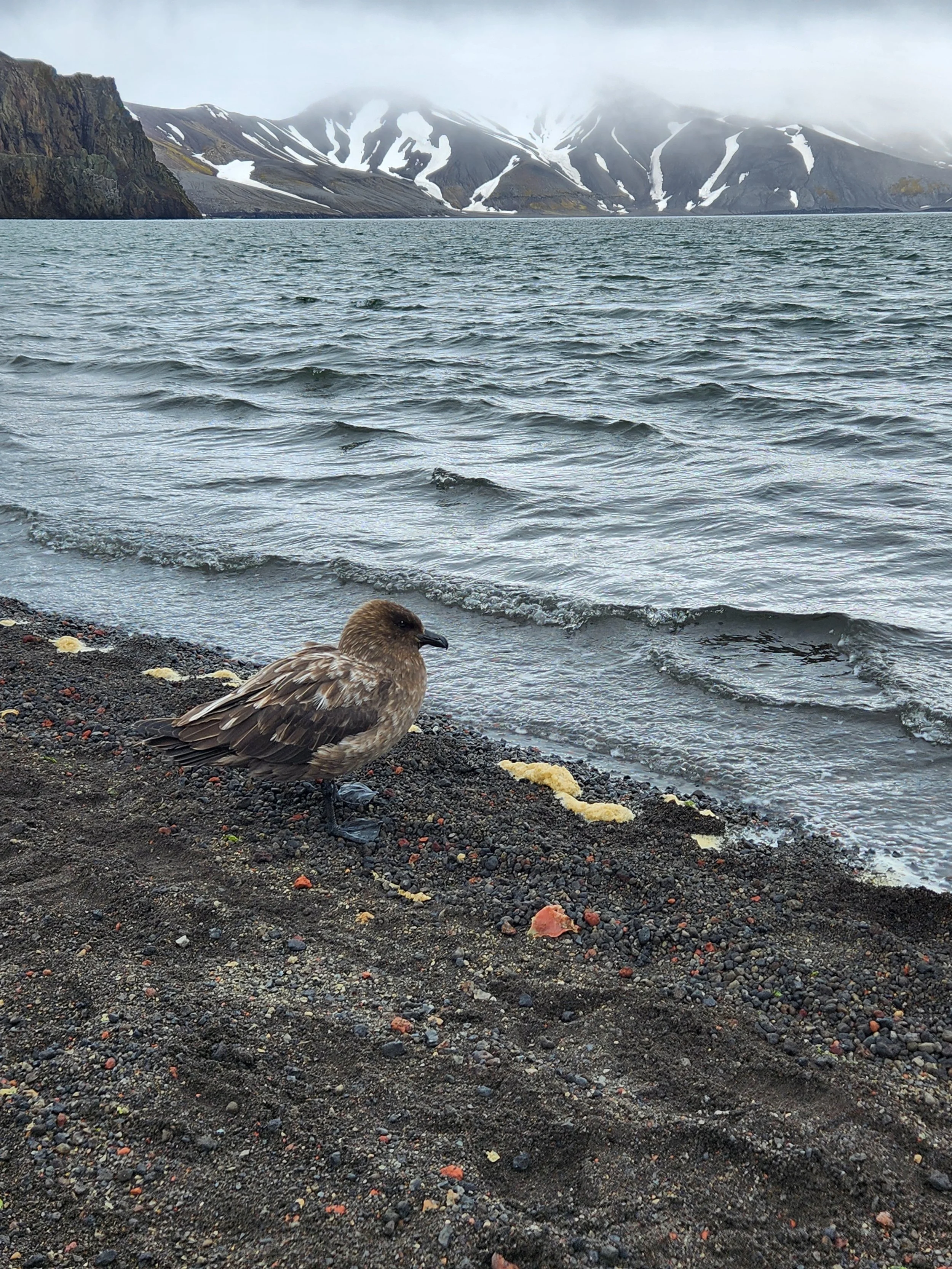
Despite the harsh environment, we still spotted gentoo and chinstrap penguins, along with skuas nearby. Walking around the island, we could see remnants of its past as a whale processing station in the early 1900s, including whale bones and equipment later buried by volcanic mudflows.
Before landing, we received a safety briefing outlining what to do in the event of an eruption — a surreal reminder of just how powerful nature is here.
A Bittersweet Goodbye to Antarctica
Returning to the ship for the final time was emotional. While we still had two days at sea ahead of us before reaching Ushuaia and eventually Buenos Aires, it felt impossible that our time in Antarctica was already coming to an end.
This journey gave us memories we’ll carry forever —
Thanks for coming along on this incredible adventure with us.
